Click to escape. Subject to Crown Copyright. VAD
Category: Army History/WW2

Click to go up one level

Category Index ] Order of Battle ] Organisation ] Who was there ] 2nd AIF ] Militia (CMF) ] Comforts Fund ] Salvos 1 ] Salvos 2 ] Everymans ] QM Stores ] Fuzzy Wuzzy ] Fuzzy Wuzzy 2 ] Fuzzy Wuzzy 3 ] Pidgin English ] Special Ops ] 503 Para US ] VDC ] CCC & CAC ] AWAS-WRAAC ] Land Army ] Red Cross ] [ VAD ] War Brides ] Pocket Guide ] Battles of WW2 ] Battle Honours ] NZ WW2 ] 2 Div NZEF ] NZWRAC ] Unit Histories ] Aust Remembers ] Brit. Free Corps ] Final Solution ]

Voluntary Aid Detachments (VAD)

The primary role of a Voluntary Aid Detachment (VAD) member was that of nursing orderly in hospitals, carrying out menial but essential tasks – scrubbing floors, sweeping, dusting and cleaning bathrooms and other areas, dealing with bedpans, and washing patients.
 They were not employed in military hospitals, except as ward and pantry maids; rather, they worked in Red Cross convalescent and rest homes, canteens, and on troop trains.
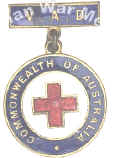
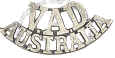
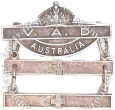
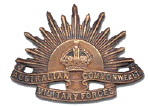
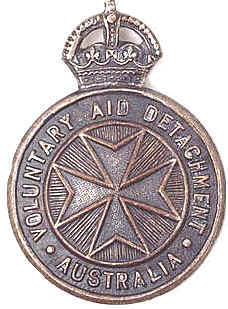
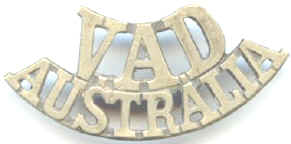
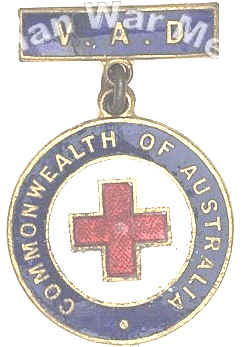
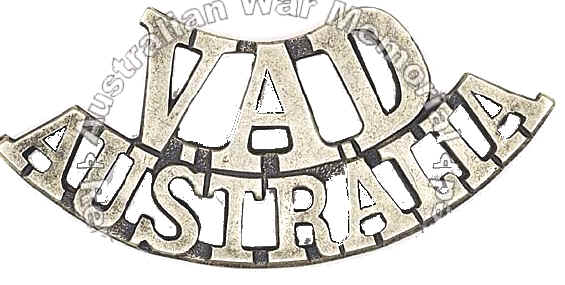
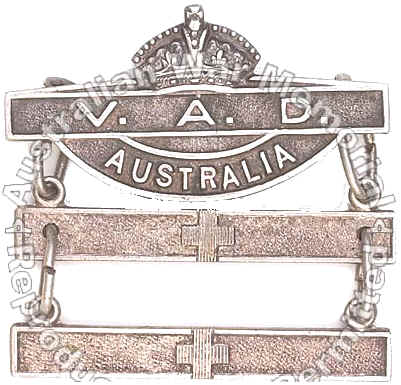
Click to enlarge Click to enlarge Click to enlarge L to R. These 3 badges are all for members of the Voluntary Aid Detachment (VAD); tie pin, shoulder title and long service badge (1 bar per year)

At the start of the First World War, Australian VADs were restricted from traveling overseas by the Defence Council. As a result, many chose to travel on their own initiative and join British detachments, often in Australian Hospitals. It is reported that the 1st Australian Auxiliary Hospital included in their nursing staff some 120 VADs, chiefly Australians in the British service, employed through the Australian Red Cross Society. This policy was changed in 1916 after a request from Great Britain, and the first attachment of thirty official Australian VADs to serve overseas left Australia in September 1916.

The role of VADs did not significantly evolve between the wars. VADs in the Second World War were given more medical training, but they were not fully qualified nurses. They worked in convalescent hospitals, on hospital ships and the blood bank as well as on the home front. In 1943, the government created the Australian Women’s Auxiliary Service (AWAS) to control the large numbers of VADs employed by the military.

VADs are now known as the Voluntary Aid Service Corps (VASC). Text from AWM

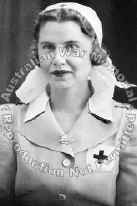
  • WA. 1942-11. Glynneath L. Powell, a member of the Voluntary Aid Detachment (VAD), in uniform. Soon after this photograph she began her service with the Australian Army Medical Women's Service (AAMWS) where she gained the rank of Sergeant, Serial No. WFX37442. (Donor G. Cody)


.Back Next

Email  

 Search   Help     Guestbook   Get Updates   Last Post    The Ode      FAQ     Digger Forum

Click for news

Sponsor: vacant              Statistics Over 35 million page visitors since  11 Nov 2002  More detail

Click for Internet Content Rating Association 

We use and recommend Riothost  for great web hosting deals. $10/year.

Start your website with Riothost - Great deals - 14 days trial FREE

to ensure that the site remains safe for  kids.

No chat room.

14 days   FREE  trial.  

Digger History:  an unofficial history of the Australian & New Zealand Armed Forces