 |
| Category: Conflicts |

|
|
|
|
|
 |
Aussies in the
Russian Revolution
including 2 VC
awards |

|
No
Australian units were engaged in the operations in Northern Russia
but a number of men of the AIF who were in England in 1919, awaiting
repatriation to Australian, joined a volunteer force raised to
relieve British and Allied troops already in Russia. The new force
was designated the British North Russian Relief Force. In order to
join this body the Australians had first to obtain their discharges
from the AIF, and this was done in the UK. They were then enlisted
in the British Army, and were allotted to the 45th
Battalion, the Royal Fusiliers and the 201st Battalion,
Machine Gun Corps. Two companies within the 45th
Battalion were composed of Australians. Thus, between 200 and 300
Australians were prepared to accept a further period of vigorous
active service.
The
volunteer brigade of the relief Force was commanded by
Brigadier-General LW de V. Sadlier-Jackson, and arrived in Russia on
5th June 1919.The Australians were prominent in several
actions, their first of major importance being on 23rd
July. On this occasion, 150 of them had gone with General Ironside
when he went to investigate a meeting of White Russian forces at
Obozerskaya. It was this group who repulsed a Bolshevik attack on a
railway in the area. The Australians surprised the enemy during a
relief of their forward blockhouses, killed thirty with the bayonet,
wounded many others and set fire to the blockhouses before
withdrawing.
Brigadier-General
Sadlier-Jackson launched a attack with his brigade, including the
Australians, on the Dwina front on 10th August and this
also was a complete success. Over 3,000 prisoners were taken and
heavy losses inflicted. The objective of enveloping and destroying
the enemy was attained, thus opening the way for the peaceful
evacuation of British and Allied forces. Nineteen days later, the
two Australian companies were again employed in routing the
Bolsheviks in a bayonet charge on the railway near Seleskoe.
By
this time General Lord Rawlinson had arrived in the country to
direct the evacuation of all Allied forces and, on 10th
September, the withdrawal to Archangel commenced. This operation was
completed by the 23rd, and the troops embarked for home
five days later. Of the Australian volunteers, two received the
Victoria Cross, Corporal Arthur Percy Sullivan 45th
Battalion, the Royal Fusiliers and Sergeant Samuel George Pearse,
45th Battalion, the Royal Fusiliers.
Taken from 'They
Dared Mightily' (1986) by Lionel Wigmore. |
|
Australian VC
Winners in the 45th Battalion Royal Fusiliers |
|
|
 |
|
|
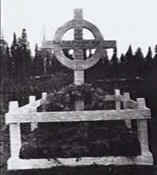
S
G Pearse VC MM
29 August 1919
|
The
Pearse Grave |
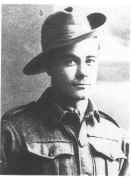
A
P Sullivan VC
10 August 1919
|
| On 24 August 1919, north of Emtsa, North
Russia, Sergeant Pearse cut his way through enemy barbed wire under
very heavy machine-gun and rifle fire and cleared a way for the
troops to enter an enemy battery position. He then charged a
blockhouse which was harassing the advance and causing casualties,
and killed the occupants with bombs. A minute later he was killed,
but it was due to him that the position was carried with so few
casualties. Other Decorations; MM
Later
achieved rank of Second Lieutenant. |
On 10 August 1919, at Sheika River,
North Russia, the platoon to which Corporal Sullivan belonged, after
fighting a rearguard covering action, had to cross the river by
means of a narrow plank, and during the passage an officer and three
men fell into a deep swamp. Without hesitation, Corporal Sullivan,
under intense fire, jumped into the river and rescued all four,
bringing them out singly. But for this gallant action, the men would
undoubtedly have drowned, as all ranks were exhausted and the enemy
was less than 100 yards away. |
|
| At the end of World War
1 Russia was engulfed in a bloody civil war as the Bolshevik regime sought
to establish itself. In mid 1918 a small British-French-American
expeditionary force seized Murmansk and Archangel to retrieve Allied
supplies which had been given to the crumbling White Russian forces of the
Czar, but with the fanciful further goal of creating a situation which
might lead to the fall of the new Bolshevik regime.
A number of British
and Australian soldiers, particularly those who had enlisted late in the
war, volunteered to join the force raised to relieve British and Allied
troops already in Russia. The campaign was to last more than a year, a
year of hard-fought battles against strong Bolshevik forces.
The
Australian volunteers were enlisted in the British Army for the duration
of the campaign, and allotted to the 45th Battalion of the Royal Fusiliers
or to a Machine Gun battalion. Two companies of the 45th Battalion were
entirely Australian. The British brigade mounted a major offensive on 10
August 1919 that enveloped and destroyed a large enemy force, inflicting
heavy casualties and taking 3000 prisoners. On 29 August the two
Australian companies of the 45th Battalion routed another Bolshevik force
in a violent bayonet charge.
The British actions were instrumental in
opening the way for peace negotiations which lead to the evacuation of the
Allied forces in September and October 1919. |
 |
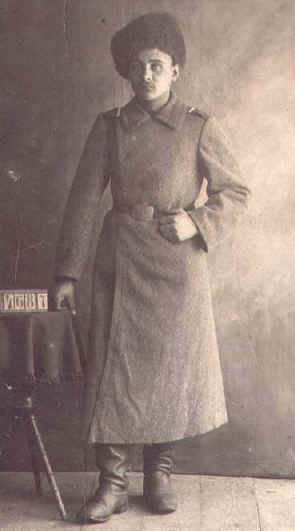 |
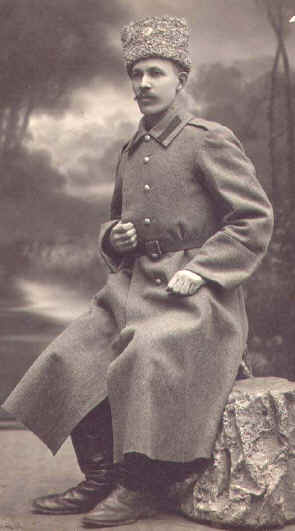
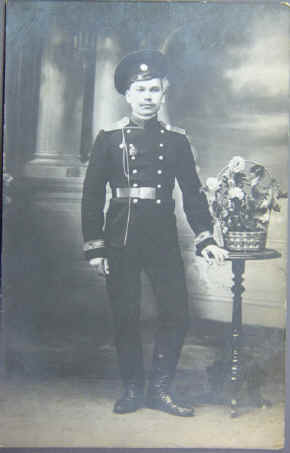
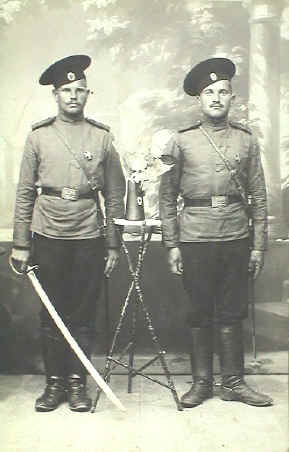
| Photo left is
a Russian soldier of the 1914/20 era and the photo right is of a Cossack
of the same era. It is unknown which side they were on at the time the
Aussies were there. |
|
|
 |
|
A Russian soldier 1919 |
Russian soldiers 1918 |
 |
 |
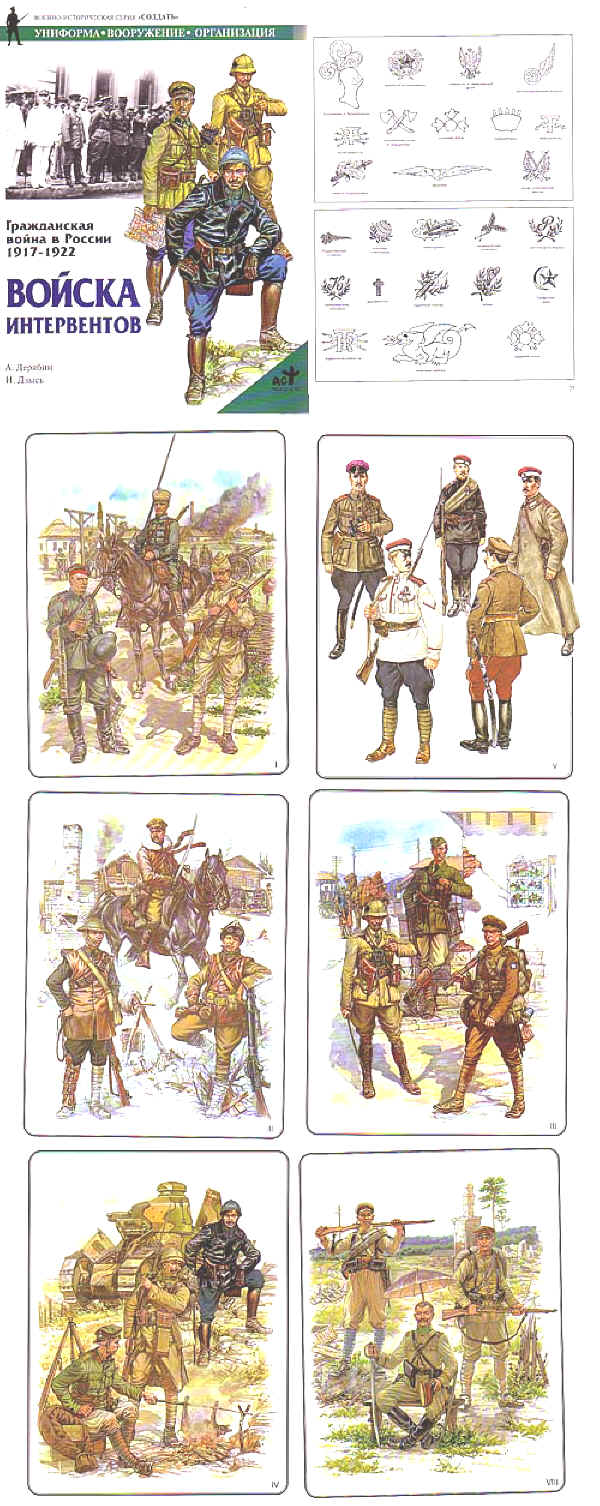
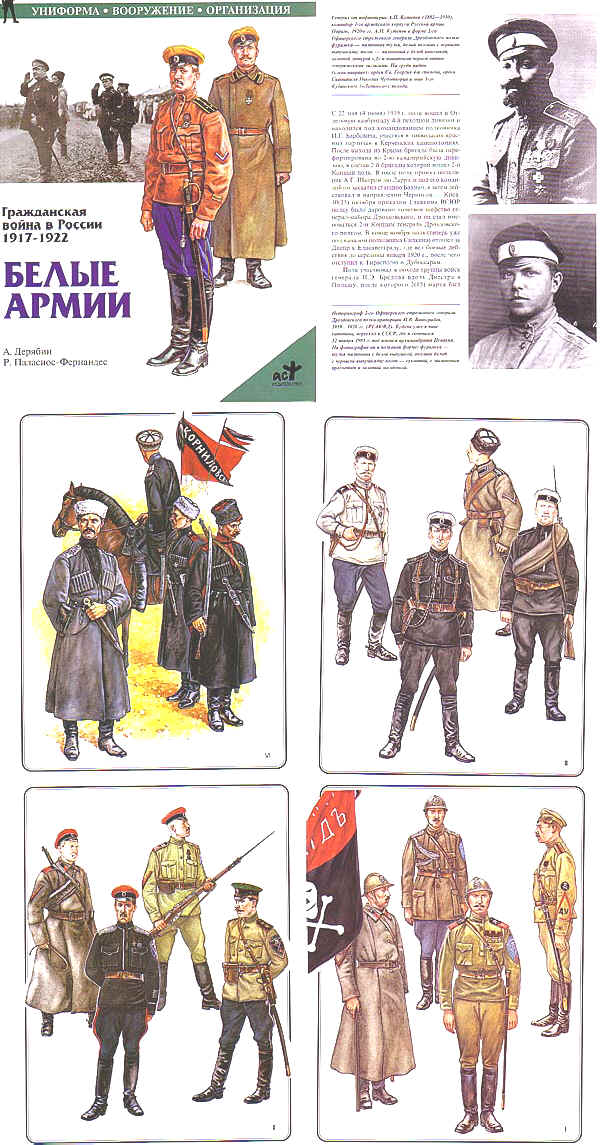
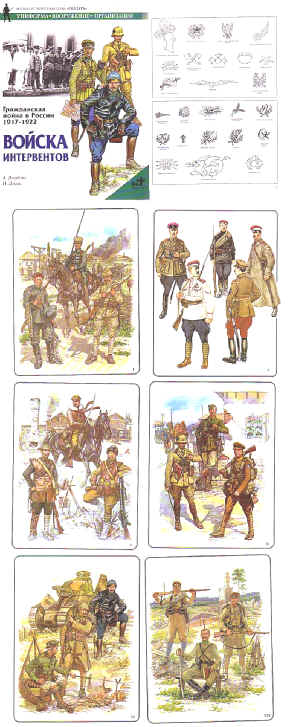
| Foreign
Units who fought in Russia |
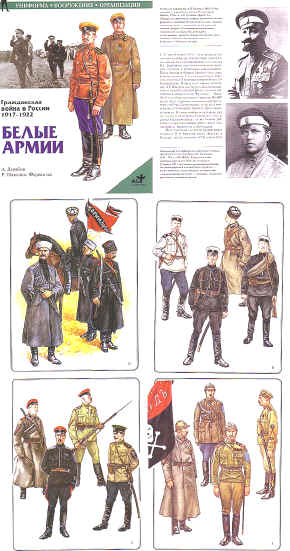
Some of the
Russian troops of the era. |
|