YPRES
BATTLE OF BROODESEINDE AS REPORTED IN
THE CLARION
BATTLE OF BROODESEINDE YPRES 4TH - 6TH
OCTOBER 1917
"SPECIAL FOR "THE
CLARION"
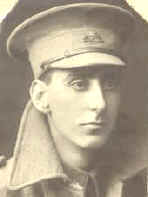
By PRIVATE VERDI
SCHWINGHAMMER "B" COY 42ND BATT AIF five weeks preceding the
actual 'stunts" were very happily spent by us at Remilly (a small
French village, away from the rear of the guns, where inhabitants were
very kind to us.) During this time we were engaged in a certain amount
of drill - enough to keep our bodies fit - and also had several practice
stunts over country which was then thought to be similar to that on
which the real stunt was to be done.
These practices were
supplemented by lectures explaining in detail our future operation.
One night, just as we
were settling down to sleep in our billets, the order came to be ready
to move up towards the line, early next morning. This news had the
effect of a general stir and the next couple of hours were spent ^~
packing our packs and getting things in general ready.
Next morning we were up
early and after a good breakfast - and having said goodbye to the
hospitable proprietress - Madame - of our billets ( who brought us
apples, wine etc., as parting gifts - we started on our memorable march
of 42 kilos, which occupied three days and taxed our endurance qualities
to the utmost.
Poperinghe (Belgium) was
now our location and we remained here five days, resting our bodies and
feet in particular, which latter suffered most through the long march.
Whilst here, "
Fritz" came over regular every night and bombed the town and camps
very close to our tents ( fragments of shell came through the canvas)
and also dropped one in the machine gunners camp which adjoined ours,
causing the death of many brave Australians. That night many bombs were
also dropped on the town, doing great damage and killing many civilians.
Early every morning we
could hear our guns bombarding "Fritz's" positions, prior to
our troops attacking.
At last the afternoon
came for us to move up and we were told - for the first time - that our
particular attack was to take place two mornings after. We were
"fell in" and shown an excellent photographic map (also a
model) taken by aeroplane of the country we were to advance over and
also our objectives - the little woods found out being shown very
plainly on it. After having all our extra "tools" etc., given
us
(THE BATTLE OF BROODSEINDE 4th - 6th
OCTOBER 1917
Our five weeks happy stay
in the village of Remilly came abruptly to an end one night when the
Sergeant came and awakened us at about 3 o'clock and told us to get up
and be ready to move off in a couple of hours' time.
This news had the effect
of a general stir and we were busy packing our packs and getting things
in general ready.
After a hurried breakfast
and having said 'au revoir" to the hospitable proprietress -
Madame- of our billets (who brought us wine, apples, etc. as parting
gifts) at daybreak we started on our memorable march of 42 kilos which
occupied three days and taxed our endurance qualities to the limit.
Poperinge (Belgium) was
now our location and we remained here five days, resting our bodies and
feet in particular - which latter - suffered most through the long
march.
Whilst here,
"Fritz" came over regularly every night in his aeroplanes and
bombed the town and camps.
One night he dropped two
bombs close to our tents (fragments coming through the canvas) and also
dropped a bomb on the machine gunners' camp - which adjoined ours -
causing the death of 36 Australian soldiers.
That night, many bombs
were also dropped on the town doing great damage and killing many
civilians and soldiers.
Every morning we could
hear our guns bombarding the enemy's positions prior to our troops
attacking.
One afternoon, our
procedure in the battle was explained to us and we were shown an
aeroplane photograph (and a medal) of the country we were to attack and
advance over. Our objectives; the little woods, swamps and ruined
buildings were very plainly shown on the photographs.
On the 2nd October, we
were told that our attack was to take place two mornings after - on the
4th.
The various Chaplains
came and gave us church services in the open on the parade ground.
Then, after a good meal
we began packing up. All our extra "tools" etc. were given to
us; such as 150 rounds small ammunition, - and because I was a rifle
grenadier, a bag containing 8 Mill's bombs and ten rods - eight sand
bags, shovels, two days' rations, etc.
We marched to the
Poperinghe railway station and entrained for Ypres. An hour's journey
brought us to the ruined Asylum near Ypres (that was as far as the train
could go as the Ypres Railway Station had been blown to pieces) where we
disentrained and marched single file ( on account of the huge amount of
traffic on the roads) through the ruined city to an open piece of ground
at the back of the Madeline Cemetery where we bivouacked for the night.
Just in front of us were
our eighteen pounder batteries which kept "barking" (firing)
all night and on our right was a huge naval gun which fired at regular
intervals.
German planes came over
during the night, dropping bombs and raining machine gun bullets on us
but none took effect in our locality.
Daylight revealed a great
number of Australians camped on either side of us and we walked amongst
the various Battalions to see if there were any that we knew. We were
told to rest ourselves that day - which we did, with the exception of
walking down to the water point at Ypres to refill our water bottles.
This gave us the
opportunity of seeing the ruins of the Cathedral and Cloth Hall (which
was one of the finest buildings in Europe before it was destroyed by the
Germans.)
The amount of traffic
going up to the lines was tremendous;- a continual stream of ammunition
lorries, food lorries, water carts, cannons ( some drawn by mules, some
by lorries), Red Cross Ambulances, etc. etc. and thousands of troops
wending their way up.
No wonder that some of
those thoroughfares to the lines were called after those of London, such
as "Hyde Park Corner", "The Strand" etc., and as far
as traffic was concerned, they didn't belie their names.
At dusk, we were given a
hot meal, for some the last on this earth, for others, the last hot ones
for four days and, after a final talk given us by our Captain and the
Chaplains, we commenced the approach march to the line.
It was now 9 p.m. and all
were in good spirits and quite cheerful.
Physically, we were fit
and alert and ready for battle. How different we were to be less than
twelve hours later.
Men do not go into battle
sad and gloomy as many civilians wrongly imagine. They are quite the
opposite even though they know the dreadful things they have to face and
that some of them are going to their death.
Men do not go into battle
sad and gloomy as many civilians wrongly imagine. They are quite the
opposite even though they know the dreadful things they have to face and
that some of them are going to their death.
We passed along what
seemed an endless trunk of duckboards, "keeping in touch" -
which was very necessary - if we were not to get lost. We had our first
"rest" (a few minutes' halt) just in front of our batteries
which were firing spasmodically.
After resuming the march
again, there were frequent halts caused through broken duckboards with
men slipping off into the mud and getting bogged. At several of these
unofficial halts the followings, amongst others, would be heard;
"Put out that ....... cigarette". The response from the smoker
would be; "Oh, he's windy" or "he's got the wind
up".
I am a non smoker ( the
same as quite a number of the soldiers were) so I cannot describe the
comfort or ease of mind which the men said that smoking gave them when
in danger or sitting under bombardment. I always drew my cigarette
issues and put them in my gas bag and the men always knew where they
could get a smoke.
A few shells were now
falling pretty close to us and the next stop was close to a "pill
box" (captured German dug-out) near which, to my surprise, was a
fire, from the light of which one could see several dead lying about.
We were now on ground
which, a few days' previously, had been in the enemy's possession and
the dead had not yet been buried.
Machine gun bullets were
now hissing overhead as "Fritz" occasionally
"rattled" his machine guns. We were told to keep very still
when an enemy verey light went up as it is practically impossible to
make out stationary objects when verey lights are sent up, but the
slightest movement is easily noticed.
After a while it was
found that we were on the wrong track and the order; "About
Turn" came along which meant going back a considerable distance the
way we had come. Eventually the right track was found and we continued
moving onwards.
Shells were now falling
amongst us and we took shelter, that is, huddled together in shell
holes, until the shelling ceased. The next movement brought us closer up
and the enemy lights now seemed almost upon us.
He said to me, just a few
minutes before he was killed; " Well, I have been used to the bush
all my life, sleeping amongst the dingoes, etc. and I was never afraid
before, but I feel frightened tonight."
As we were getting into
position, a bullet got one of our men close to me, killing him
instantly. We were all sorry that poor old "brumby" (that was
the name we called him) had fallen. He came from the backblocks of
Queensland and was a rough diamond but had a good heart and was popular
amongst us. He was uneducated and couldn't write, and I used to write
his "love letters" to his girl in Queensland for him. He said
to me, just a few minutes before he was killed; " Well, I have been
used to the bush all my life, sleeping amongst the dingoes, etc. and I
was never afraid before, but I feel frightened tonight." We assured
him that everything would be all right, but he fell dead from a bullet
soon afterwards. Such is war!
A corporal in charge of
our platoon told us to make ourselves comfortable. I said "Where
are the trenches?" (having pictured in my mind, well made and
comfortable trenches which we generally occupied when holding the line.)
He replied; "These
are the trenches." Merely a series of shell holes filled with
water.
Our tape was laid in a
line in front of them. A white tape was generally laid down in front of
the trenches to keep us in line so that we could all advance together
when the battle commenced.
We were now glad to rest
our weary limbs, even if it were only a muddy shell hole, it being now 3
a.m. The approach march having occupied 6 hours.
In passing, I may say
that this was my first "Hop Over" (battle) - although I had
been up to the line on working parties before - and I was quite fresh,
in fact, quite excited and had no idea of the dangers and didn't realise
what was ahead of us and what we had to go through.
The Officers and N.C.O.'s
were now busy seeing that the various sections were all in order and in
their proper positions. The Germans were only about two hundred yards in
front of us and they were continually firing flares (verey lights) which
lighted up no-man's-land splendidly.
It is a wonderful and
very pretty sight to have seen the many coloured lights which the
Germans (and we too) used to illuminate no-man's-land and also for
signal purposes. We also used to say that the Germans had the contract
for lighting up no-man's-land, thereby saving us the trouble and
expense.
White and gold lights
were used for illumination and red and green for signals.
A civil display of
fireworks could not equal the "free" exhibitions we used to
witness nightly, and it could have gladdened the heart of many children
to have seen them.
A civil display of
fireworks could not equal the "free" exhibitions we used to
witness nightly, and it could have gladdened the heart of many children
to have seen them.
A corporal and I shared a
shell hole between us. He said to me; "I am going to have a little
snooze. Wake me at 5 a.m." This appeared to me to be very brave to
even think of sleep under such conditions, but he was very weary and
also an old soldier and had been in several battles.
However, he didn't get
his desired snooze.
The shells were falling
more often and getting uncomfortably close. One burst not very far from
us giving us a shaking and covering us with mud so we crept further out
into another shell hole.
As the lights went up I
could see figures in single file in front of us, whom I thought were
Germans, but were only the British troops then "holding the
line" being relieved by us preparatory to the attack.
About half past five, I
saw many red and green lights go up from the German positions and
remarked to the corporal how pretty they looked.
He said; ' Now we are in
for it!" "The Germans have taken a tumble that we are going to
attack them and they are sending up their S.O.S. ( Save Our Souls)
signals to their gunners."
Almost immediately, a
heavy barrage (many cannons firing together) descended on our positions
and continued until our barrage opened up half an hour later.
the Corporal remarked
that the "Minnies" (nickname for the German Trench Mortar -
Minen Werfer - a "dreadful weapon") were coming over. At that
time I didn't know anything about them. Now I do!
We could hear
"Stretcher Bearer" being called out as casualties occurred,
those closest to the railway lines suffering heavily. The last hour
previous to hopping over seemed to me to be the longest that I have ever
experienced and I was continually looking at my luminous watch to see
the time.
All one's past life
seemed to be pictured in one's mind during that short period and our
thoughts were naturally of home and our loved ones and also what the
future would bring forth.
Just as day was breaking,
zero hour, 5.55 a.m. arrived, and, as if by magic, our guns opened up
and we rushed forward and commenced the attack.
It was said we had one
eighteen pounder battery every 25 yards, on a front of several miles,
besides many larger guns and hundreds of machine guns and Lewis guns
that morning. Imagine all these firing together.
Our barrage seemed almost
to silence the German guns.
For the first five
minutes or so, I could remember nothing, but after I had collected
myself, found myself going automatically forward with my section.
After hopping over I saw
no more of my Corporal, but afterwards I learned that he had his right
leg blown off and I am glad to say that he recovered and returned to
Australia.
It was now, pretty light
and the scene which confronted us I will never forget nor could I
adequately describe it.
It seemed as if hell had
been let loose on earth. The ground was shaking and the air was hot and
full of the smell of powder from the guns.
The noise was terrible.
Dead and wounded were
lying everywhere and as far as one could see on either side was a mass
of soldiers moving forward behind the barrage.
Shells were falling in
front of us and amongst us and earth was being thrown up into the air.
In front of us our barrage was slowly creeping forward, the sight of
which was one of awe inspiring grandeur. Behind and amongst us a few
"shorts" ( our own shells which fall short amongst us) and
some German shells were falling.
I saw one shell fall
among a group of men, seeing human limbs, etc. being hurled into the
air.
After I had gone a few
hundred yards I came across a group of our own "C" Company
men, lying in a group, all badly wounded. I knelt down and found one of
them to be our Lieutenant whom I made as comfortable as possible and
gave him some whisky which he carried in his water bottle. He
(Lieutenant Ballard) afterwards died.
Also gave the others some
water, emptying my own water bottle in doing so, but we could always get
plenty of water after a battle by taking the water bottles from the dead
soldiers.
Whilst I was thus
engaged, our Captain happened to pass by and sharply told me to advance
and get on with our platoon and leave this kind of work to the Army
Medical Corps. However, this rebuff, which was quite military and
correct, did not prevent me from assisting some more of my wounded
comrades further on. The Red Cross had more than they could do to cope
with the wounded.
We were now getting close
to a German Pill Box which was rushed and captured. By now, Germans were
running towards us, surrendering (from the various Pill Boxes that had
been captured.) A lot of them put up their hands and shouted "Mercy
Kamerads". Some of them were waving Red Cross and white flags and,
as they passed us, they were relieved of any valuables they possessed.
Souveniring the enemy being a strong characteristic of the Australians.
One German ran out of a shell hole to me, handed me his watch - which on
the spur of the moment, I took - but afterwards was sorry for taking it,
because I felt if ever I was taken prisoner, I would not like my watch
to be taken from me.
I came across several of
our men badly wounded (some with arms and legs off etc.) but the way
they bore their pain was wonderful - no complaining or grumbling. It was
a frequent sight to see a wounded German and a wounded Aussie helping
each other to get to the advanced dressing station.
A shell burst near us and
a piece cut through my puttee and made a small flesh wound as big as a
sixpence. It was hardly worth taking notice of at the time and it
eventually healed up, but afterwards gave me a lot of trouble, as it was
poisoned. It broke out afterwards and I had a lot of hospital in France
and England with it. It still breaks out periodically and I receive a
war pension for it.*
* To his dying day, Verdi
carried this wound as a suppurating ulcerous mess on his inside left
leg, just above the ankle. When he would call to visit, he would always
be asked; "how's the leg?" and without fail, he'd unwrap the
bandage and show the enquirer. It never seemed any worse and it never
seemed any better. It was always horrible. How he had been accepted for
service in the Second World War is beyond me.
By now, I had lost my
section, in fact had got right away from my Battalion (which I could
tell by the various distinguishing marks that each battalion wore -
generally coloured patches on the backs of our tunics.)
In my endeavours to find
my Battalion I got bogged in a small swamp where there were many others
- some of them wounded. I managed to free myself and found my Battalion
again.
During all this time, we
were gradually advancing and shell fragments and machine gun and rifle
bullets were flying all around us. When one considers the amount of
material that is hurled around in a small space during a battle, it is
surprising to see the number of soldiers who come out alive and
unwounded.
At last we reached our
objective and on looking at my watch, found it was 9 a.m. - three hours
since the attack commenced but it didn't seem that long.
Ours was the second - or
middle objective.
The 41st battalion was
advancing through ours and going forward two hundred yards and the 44th
(was) digging in three hundred yards behind us.
The Platoon Sergeant
showed us where to dig and told us to hurry as our barrage was only
timed to play in front of us just long enough to give us a little
protection while digging in.
Digging our trenches
proved very easy as the ground was soft, in fact, too soft - used to
fall in - and when we were down three feet, we came to water so the
trenches were soon quagmires and we were wallowing in them like a lot of
pigs.
While digging in several
were killed and one of our young officers - one of the most popular and
best loved men in the Battalion (Lieutenant Hart) - was killed by a
bullet only a few feet from me.
His parents have erected
a fine memorial to him - which I have seen - in the Southport School
Chapel - where he was educated.
Our trench was right in
front of a Pill Box which was made into Company Headquarters.
Several of our men were
now not with us, many having been killed, others wounded.
Our contact aeroplane
flew overhead and we lit the flares (which had been supplied to us) to
show our positions to the plane. After our barrage ceased, intermittent
fire was carried on by the artillery of both sides all day.
The first counter attack
was launched by the Germans at 7 p.m. which was repulsed by us without
even leaving the trenches. When the attack was made, we put up our S.O.S.
signals which brought down from our batteries and machine guns a
wonderful barrage.
Runners were busy
throughout the night keeping in touch with the different Companies and
Platoons and carrying important messages.
I could not but help
admire their coolness and bravery in doing their work under a continual
bombardment.
About three o'clock in
the morning a pal and myself were detailed to carry a dead Aussie from
the Pill Box into a shell hole - which we did. On our return we were
sent to help carry a stretcher case to the advanced dressing station
which was a captured Pill Box about 100 yards behind our trench. This
proved very difficult as the night was dark, the mud very bad, the
shells bursting all around us. But we succeeded all right.
On our way back we were
told to go over near the ruined Zonnebeke railway station and get the
rations, but as we could not find any rations there, we went back to our
trenches to find that the rations were already there - brought by the
ration carriers.
It was now daylight. Our
second day.
A German plane flew over
our trenches, so low that we could see the face of the aviator as he
looked over from his machine. He dropped lights to show his artillery
where our positions were, and that night, the Germans put down on us a
terrific bombardment.
About midday the Sergeant
came and asked for two volunteers to carry a serious stretcher case from
the 41st Battalion (in front of us) to the dressing station. A pal and
myself went and arrived safely at the trench. We started to carry the
wounded chap on an oil sheet but eventually had to wait for a stretcher.
After arriving at the dressing station we sat down to drink some tea and
have some biscuits, which the gunners had given us.
Our eighteen pounder
batteries were firing close by and whilst we were watching one fire, a
shell burst prematurely killing an English Officer and wounding several
mules. Nothing is perfect and a lot of our shells used to explode
prematurely.
I consider that stretcher
bearers, generally speaking, are the greatest heroes in a battle, They,
in my opinion, have the most dangerous and strenuous work to perform,
and too much praise cannot be given them for the noble and excellent
work which they carry out.
It was dusk when we got
back to our trench and we were told to get ready and pack up as we were
to be relieved that night. But we were not relieved that night and I
think we ought to have considered ourselves lucky that we weren't.
The Hun that night put
down a terrific bombardment on us which lasted all night and very many
of our men were killed or wounded. A shell burst on the top of our
trench, blowing it in and buried my body. My head was just protruding. A
couple of pals (one, since killed) dug me out and freed me. I escaped
without a scratch with the exception of a severe shaking. After this, my
nerves went to pieces.
Sitting under a
bombardment plays havoc with one's nerves and a good rest and quietness
is the only cure for this.
At last daylight dawned
and we prepared to move out. Started at 9 a.m. and hurried past a corner
which was continually being shelled and where many casualties had
occurred. Each side of the track was strewn with hundreds of dead
Tommies killed going in to relieve another company the previous night as
originally intended.
In places the dead and
equipment (the latter discarded by the wounded as they evacuated) were
piled feet high, so great were the casualties.
Tired, hungry and sleepy
(having had no sleep for three days and nights) we struggled along,
through mud, slush and dead, not resting until we got back a
considerable distance and then fairly safe.
Coming out of the line is
not the same as going in.
When going in we are in
order and kept together, but coming out it is every man for himself to
get along the best way he can.
We were now on the never
to be forgotten Menin Road which was strewn with thousands of dead
soldiers and mules.
After several rests,
another digger and myself reached the outskirts of Ypres where the
Y.M.C.A. (Young Men's Christian Association) gave us hot cocoa,
biscuits, chocolates and cigarettes. Strengthened by these we continued
on and eventually reached the ruined asylum where the rest of the
Battalion had already arrived. We were given a real good hot meal of
bully beef stew which made new men of us.
It was now raining
heavily and a seven kilo march was ahead of us. Our Captain very kindly
and thoughtfully gave myself and a mate a lift on one of the cookers.
Huts on the outskirts of
Poperinghe were reached at dark, when we were given another hot meal,
our packs and several blankets - which one does not take into battle
with them - only when holding the line.
Then followed two good
days' rest (we slept most of the time) before going back again - this
time to hold the line.
The roll was called and
showed to what extent the battle had cost us in wounded and valuable
lives.
In conclusion may I say
the Battle was a success, that is, all our objectives were gained and
held and the total number of prisoners taken by the Australians that day
was well over four thousand.
The foregoing is a
description of the Battle of Broodseinde (Ypres) written by No. 2639,
Private Verdi G. Schwinghammer, "C" Company, 42nd Battalion
A.I.F. which was awarded the third prize of 100 francs at the Third
Australian Divisional Essay Competition, held after the Armistice at St
Maxent, near Abbeville, France. There were eighty three entries.
HOLDING THE LINE
On 18th October, 1917, we
marched to Abraham Heights and held the line for several days. We were
under continual bombardment all the time and many were killed or
wounded. It was cold and wet weather and we were all "fed up"
but nothing out of the routine of trench warfare happened.
I got quite sick and
knocked up and was ordered out of the line to the details camp near
Ypres cemetery for a day or two's rest. As I got no better I was sent to
the Field Ambulance in the ruins of the Cloth Hall and the Dr who
examined me said that I was suffering from shell shock - although not
very serious - and required a few week's rest.
We were sent in Red Cross
motor cars to the Canadian Hospital at Poperinghe.
During the night the
Germans bombed the hospital and one sister and a couple of patients were
killed.
After a couple of days
here we were taken in a Red Cross train through Calais to the British
Red Cross Hospital at Wimereux, Bologne. This was a fine hospital and
beautifully situated near the beach.
They gave me a good hot
meal then a hot bath and after being given a pair of pyjamas was sent to
bed where I remained for ten days, sleeping most of the time. It was
just wonderful to be clean and get a good rest in bed with pyjamas and
sheets and good food and quietness.
The sisters were very
good to us, I picked up wonderfully and was soon on the road to recovery
again and was sent to the Convalescent Hospital on the hill adjoining
Napoleon's great monument. This was a statue of Napoleon on a column 150
feet high. He was facing Europe - looking at all the territory he had
captured. Had his back to England.
It was Napoleon's
intention to have this statue erected facing England when he conquered
it ( he designed this monument before Waterloo) but the French were
honest and when he did not conquer England, they erected the monument
with his back to England.
After a week here I was
sent by train to Le Havre for a day, then by train to Caestre where I
rejoined my Battalion which was out of the line, resting.
DRILLING AND HOLDING LINE
It was now snowing
continually and bitterly cold. One day, my cousin, Bernie Johnson came
up from the 25th Battalion to see me. He was afterwards killed in a raid
at Morlancourt on 10th June 1918.
I received large mail
here (over 40 letters and several parcels.)
Working parties, digging
trenches for cables, now occupied our time I shall never forget the
frozen ground when the ice had to be broken with a pick before we could
start to dig.
The one bright spot here
was the Y.M.C.A. That fine man, the Presbyterian Padre Clark was in
charge.
While here, the news came
through that the Australians had captured Jerusalem and we celebrated
the event.
Part of the Battalion now
went to a small village called Tilques (20 kilos distant) for a week's
rifle practice. While we were away at Tilques one day, a German plane
dropped bombs on the parade ground, killing many. One of the bombs
dropped near the Y.M.C.A. hut, blowing the end off it and damaging the
piano beyond repair.
We got another piano and
on our return had sing-songs every night. We used to get a free cup of
cocoa or coffee and some biscuits before we went to our huts to sleep.
Much to our regret, we
marched to Waterlands on 20th December and stayed at this cold miserable
camp for a few days. We went to Nieppe several times. This place was in
ruins.
Then on Christmas Eve we
marched into the line at Bois Grenier (Armentieres) and it was a fairly
quiet sector here. Everything was covered with snow.
On Christmas Eve night we
could hear the Germans singing and playing their musical instruments in
the trenches. Very few shells came over for a few days.
On Christmas Day the C.
of E. Chaplain in our Brigade - we had no C. of E. Chaplain in our
Battalion, came into the front lines and gave us Holy Communion.
We were each given a tin
of fruit and a tin of preserved sausages for our Christmas dinner. My
pal and I were hungry so we opened both tins and ate half the contents
for breakfast, putting the remainder - in the tin - on a shelf in the
dugout, covering them with a board with a stone on it.
The rats were very bad in
the trenches and dugouts. As we were off duty, we went to sleep for a
couple of hours and on waking and going to get our dinner, found that
the rats had knocked off the coverings and had eaten everything. So we
had dry biscuits for our Christmas Dinner of 1917.
Christmas Day in the
trenches was quiet with the exception of an amusing episode. It was
moonlit. One of the men thought he could see Germans creeping towards us
in front of the trench. Of course, when one saw anything, we all
imagined we could see the same thing. So we threw several bombs over in
the direction where we thought the Germans were and fired several shots,
but nothing happened.
Next morning, through the
periscope, we could see the tops of several stumps. These were what we
had thought were Germans the night before. It appears that when we first
occupied this trench the stumps were completely covered with snow, but
as the snow melted, it left the tops exposed - and these looked like men
creeping forward.
On Boxing Night I had a
narrow escape. One of the men was cleaning his rifle on the step of the
trench. I was on duty standing up close by. He thought the rifle was
unloaded. It wasn't. The trigger caught and it went off, the bullet
whizzing just past my left ear and grazing it. A narrow escape!
We used to have different
pass words every night. One night, one of the men guarding the
communication trench got windy and nearly killed an officer. The guard
called out to the officer for the pass word, but as he didn't reply
quickly enough, the guard thought he was one of the enemy and fired at
him. It took effect in the neck, just missing the vein. It was only a
slight wound and the officer recovered.
Our officer on many
occasions told me not to put my head too far over the trench when of
duty on moonlight nights, as I was liable to be sniped at, but I like to
know what was going on in front of us when I was on duty. I had the
reputation of having good sight and good hearing - very little escaped
being seen or heard by me. One night I thought I heard a noise in the
wire in front of us, so when the officer came along, I reported it to
him. He and I then crawled out over the top of the trench and crept
towards the wire when all of a sudden several large rats rushed out of
the wire. It was the rats making the noise.
On New Year's Eve we were
relieved and marched back to Water land Camp. Had a good New Year's
Dinner here, supplied by the Australian Comforts Fund.
Nearly every night we
used to go up to the line on working parties. The tramp through the
great deserted city of Armentieres every night became very tiresome. We
used to march through the deserted city ( which was not damaged very
much - the inhabitants had evacuated it ) - with grass growing in the
streets and tramcars, etc. rusting on the rails, to the ruined lunatic
asylum and the, after a rest, go single file to the line a few hundred
yards away and start work on the digging of trenches. Several of our men
were wounded on these parties but none killed.
On 12th January, 1918, we
marched over the frozen cobblestone roads to Loore (many were the spills
and busters we got through slipping on the ice!) There we were billeted
in circular low roofed huts. We could lie in our huts here and see the
huge square tower of the church with its great chiming clock - so we
always knew the time.
There were some very good
estaminets (hotels) here, also eating houses with the usual eggs and
chips and coffee, which was much sought after by the troops. The few
civilians who had remained in the town did great business with the
troops. We were in Belgium now and some of the civilians would do
anything for money. They used to charge us exorbitant prices for
anything we bought and were real profiteers.
When we remonstrated with
them about their prices the inevitable reply was c'est la guerre (it's
the war!) A lot of them were spies. Some of them used to lock their
pumps so we couldn't get water, but we soon got over this difficulty. We
used to get a Mills bomb and blow the lock off and get the water that
way. Of course, the Belgians made a great fuss of this and reported us
to Headquarters, but the officers took no notice of them.
Some of the Belgians here
were caught and shot as spies. They ploughed the fields with one black
and one grey horse etc. On different days they would change the position
of the horses, thereby giving signals to German planes which flew over
very low while our planes were away,
We used to go into
Bailleul a lot. During the 'break through' of March 1918, Loore and
Bailleul were both in no-man's-land and very heavy fighting took place
there.
Working parties at
Whychittie Ridge (daylight working parties) were performed by us for a
week and the all one week we were on fatigue unloading trucks of coal
and stone.
Near Loore was a large
Convent where about fifty orphan Belgian children were looked after by
the Nuns. We used to go down there of a night and in the big school hall
(with its darkened windows and a few candles to light it up) have a
happy time. The Nuns could speak English and they taught the orphan
children to sing "God Save The King" and "Tipperary"
in English.
Some of the men taught
the orphan boys to box and they gave us some fine exhibitions. Food was
very scarce but the Nuns would never let us go away without giving us a
drink of wine or beer and we returned their kindness by giving them many
little things that we could spare and which were a luxury to them. A
piece of white bread was worth its weight in gold to them.
Major Willie Redmond -
who died of wounds - was buried in the Convent grounds and we saw his
grave. It snowed nearly all the time we were here. I was then
transferred to the Lewis Gun Section.
On the 26th January we
marched up to the front line again to near Ploeegg Steert Wood. We
occupied the line for nearly four weeks without a break.
A party of us were sent
out of the line one day back to Romarin Camp on fatigue. We halted for a
rest on our way out at a post known as Lancashire Farm. Met some Aussies
here who were coming in. Got into conversation with them and they proved
to be Sir William (General) Birdwood and party.
Birdwood didn't look much
like a General. He had old clothes on, covered with mud and his steel
hat and gas helmet strapped on. We saluted and had a few words with him
and told him it was quiet up the line and only a few shells coming over.
I believe he spent the
whole day in the trenches inspecting and visiting the various
headquarters. Some people said that Generals never exposed themselves to
danger, but here is one instance.
For a week, I was one of
the food carriers up to the front line. We (eight of us) had a dugout in
the reserve trench. As soon as it got dark we went to the cookhouse
where large dixies of stew and tea were strapped to our backs and we
trudged up the communications trench about 300 yards to the front line.
At midnight we had to bring up hot coffee and again at daylight the
troops' breakfast. We could then sleep or rest in the dugout all day. We
couldn't move about in daylight as the position was too exposed and the
men in the front line had to do without food from sunrise till sundown.
One night we went up to
the front line before it was quite dark and had a narrow escape. There
was an opening in the communication trench (not noticed by us at the
time) on which the Germans had one of their guns trained. This
particular night, as we were passing, they put a burst of shot into us.
We ducked in all directions and one of the bullets hit the steel hat of
my pal, but bounced off without hurting him. Thereafter we went up no
more till it was quite dark.
The cookhouses were
always shifting their possies in the trenches as very often the smoke
would put them away and they would be blown up by the enemy shells
trained on them. It did not matter how careful they were, the smoke from
them could be very often seen by the enemy.
One of the Italian cooks
was "Bony" Ford from South Grafton who often gave us a dixie
of tea and a little tin of fat (which was much relished by us to put on
our bread) when we were out of the line.
One day a huge shell fell
within a short distance from us but luckily it was a dud and didn't
explode - otherwise we would all have been blown to pieces.
We then went to the front
line again and held it for ten days and some of the other men had a turn
at food carrying. Some of us were picked for patrol duty at night but I
always missed this.
There was a little stream
at the back of our trench with beautiful running water and we used to
enjoy the water from it - washing and drinking - but one day we found
several dead Germans and Aussies in it. (Who had not been buried.)
Thereafter we always
waited for the official army water which came up to us in benzine cans
but nearly always tasted of benzine.
As I had now been in
France for nine months without leave and had the necessary money to my
credit in my pay book, I was granted fourteen days leave to England. The
last night in the trench before going on leave we were hoping not to get
killed or wounded and it was with light and thankful hearts that we got
clear of the trenches and danger the morning we started to go on leave.
ENGLAND
On March 1st 1918, four
of us left the trenches for fourteen days leave in England. We went to
the Red Cross Dressing Station with our leave passes and were examined
by the Doctor and certified as being free from vermin and scabies. Then
marched to Romaine camp. Slept there that night with some New Zealanders
in their tent.
We were up early next
morning and marched to Steenwerck Had to wait all day here but in the
afternoon got a troop train, which was literally packed and travelled
through a snow storm till midnight, when we reached Calais.
Marched to the great
concentration camps there and reported ourselves. We were given a tent
and had a good night's rest. Next morning we dumped our rifles and packs
and were given our steamer passes to England.
But a terrible gale had
been raging in the Channel, lashing the sea and washing a lot of the
stationary mines away from their moorings, which, of course, proved a
great danger to shipping. We were delayed here three days while the mine
sweepers cleared the Channel of them.
In the meantime, we had a
god look over the fine old city of Calais, which at one time, belonged
to England. Saw all the historical places associated with Joan of Arc,
etc.
On the morning of the
third day we marched to the pier and boarded a steamer. It was crowded
with troops going on leave and we had a fine run across the Channel of
two hours.
The great British
warships were cruising about and destroyers were flitting everywhere. We
travelled a "zig zag" course through a lane of battleships,
cruisers and destroyers. Saw the Queen Elizabeth which was at that time,
the largest battleship in the world.
Arrived at Dover at 1
p.m. and took train to London, arriving there at 3 p.m.
Went to the Australian
Army Headquarters where we were given a new suit of clothes, boots, hat,
etc. and after a shave, hot bath and a good meal, booked our beds at the
A.I.F. War Chest Club where I always stayed when in London.
The A.I.F. War Chest Club
was a large building in Westminster - near the Australian Headquarters -
and was run by the British and Australian ladies in London for the
Australian troops.
It had 500 beds in large
dormitories and had every convenience, good meals could be obtained by
the troops - mostly food supplied by the Australian people.
We were very happy as we
were away from the trenches and had fourteen days leave ahead of us. I
had £25 in my pay book which had been cabled over from Australia by my
mother.
That night we went to the
"Maid of the Mountains" in Daly's Theatre, seeing Josie
Collins in the name part.
We heard anti-aircraft
guns booming and saw the people rushing about in the darkened streets to
the tube stations for shelter. The church bells were ringing (signals
for people to take shelter) and trains, busses and everything came to a
standstill. Police were patrolling the streets on bicycles with an
electric placard on their back "TAKE COVER". We walked to the
War Chest Club where we found a lot of the staff (women) huddled
together in the basement, but as we were tired we went to bed and slept
soundly through it all. Next morning we read that 178 people had been
killed the previous night by bombs from the German planes.
No lights were exposed in
the shop windows in London and the streets were only dimly lit. A few
street lamps at long intervals were alight, but with a pale blue light,
shaded downwards and busses carried no lights at all. It was wonderful
how the traffic got about in the darkened streets. Of course, the tubes
(being underground) were brilliantly lit up.
The next morning we went
to Westminster Roman Catholic Cathedral and saw the body of the great
Irish patriot - John Redmond - who had died the day before and whose
body was lying in state in the cathedral, before being transferred
across to Ireland for burial. this is a modern Cathedral, built from
1905 - 1910 and costing £250,000, but a very imposing structure of
Byzantine architecture (with a campanile 295 feet high.) The Duke of
Norfolk (the Premier Duke of England) supplied most of the money for its
erection.
For three days we were
busy seeing the sights of London and one night left London in the
"Flying Scotsman" and arrived next morning in Edinburgh - a
400 mile non stop run. The water is scooped up as the train travels
along and the mails were caught from hooks as the train passed through
the stations.
Edinburgh is a very
beautiful city and the Scotch people couldn't do enough for us.
Saw the great Edinburgh
Castle, Holyrood Palace, John Knox' birthplace and went by bus one day
and saw the great Firth of Forth bridge. The North Sea Squadron of
Battleships were at anchor here and we saw H.M.A.S. Australia which was
amongst them.
Left Edinburgh and took
train back to York where I spent a day and night as the guest of Sir
Charles Milner. His sister, Miss Edith Milner - Sir Charles was a
bachelor - did his entertaining for him and she was called the Soldier's
mother. She wrote to my own mother a beautiful letter concerning me.
Saw through York Minster
and all the interesting and historic things of that ancient city.
Then took the train back
to London.
The same night a pal and
myself went to Headquarters to get a pass to visit Ireland. We left
London at 8. p.m. and arrived at Holyhead and boarded the Irish Mail
Steamer at 3 a.m. Travelled a zig-zag course - with all lights out -
across the Irish Channel, arriving at Kingston at daylight. Then took
train to Dublin, fourteen miles away.
Had three days in Dublin
seeing all the sights there. It is a fine city and brilliantly lit up -
quite a contrast to the English and Scotch cities - as Ireland was too
far away for air raids.
Food was plentiful as the
Irish people were not rationed. The Irish people were also very kind to
us.
We were invited one
afternoon to a large, private mansion and had tea there, being received
by butlers and waited upon by many servants.
We saw all the ruined
buildings of the 1916 rebellion. Stayed at the Four Courts Hotel.
We were shown through St
Patrick's Cathedral Trinity College (where we saw the famous book of
Kells - one of the oldest books in existence, which was written by the
monks and the crypt of St Michan's church etc.
We returned to Kingston
and took the steamer across to London by the same route and after
another two days' sight seeing in London (seeing Madame Tussauds famous
waxworks, Whitehall, St James Palace, etc.) my leave was finished.
I was lucky to have had
my leave because the day it terminated all leave from England and France
was cancelled on account of the German break through.
I reported at
Headquarters and left Victoria Station, London, next morning for Dover.
BATTLES OF THE SOMME - 1918
We left Dover by steamer
on the 20th March and had a calm passage across the Channel to Calais.
Stayed the night in the rest camp there.
That night, one of the
biggest air raids on Calais took place. Our camps at Calais received a
telephone message that the German planes had flown over Dunkirk on their
way to Calais to bomb it. The signals in camp - to take cover - were
given and we could hear the church bells in Calais ringing and the guns
booming - signals to the inhabitants that an air raid was imminent and
to take shelter.
It was a beautiful
moonlight night, with no chance of our searchlights picking up the
planes. Air raids seldom took place on dark nights. On a dark night the
searchlights sweeping the skies could nearly always pick up a plane and
hold it in the rays, thereby enabling our anti aircraft guns to aim at
it and probably get it. But, on a moonlight night a plane could be a few
hundred feet up and could not be seen although the noise from the plane
could be heard. At night, in the moonlight, an aeroplane is like a
silver butterfly in the sky and cannot be seen.
This night, the German
planes came over in two relays and bombs were dropped on the Chinese
Labour Camp (only about a hundred yards from our tent) killing 40
Chinese. They were too engrossed in playing pak-a-pu or some other
gambling game to take shelter when the signals were given.
We had a narrow escape as
the concussion from the bombs which fell on the Chinese Camp, blew our
tent in, and it was covered with mud and debris.
Many civilians were also
killed in Calais. One bomb that night fell on the beautiful Cathedral of
Joan of Arc, badly damaging it.
The next day we marched
to Calais railway station and entrained - travelled all day and arrived
at St Omer at dusk. We marched to the barracks for the night and this
city was also heavily bombed during the night, but no casualties
occurred. The civilians took shelter in the basement of the Town Hall
and the crypt of the Cathedral and the troops in the basement of the
barracks.
Next morning I made
enquiries and found that our Battalion had been relieved during my
absence and was resting for three weeks at Lottenheim near Boulogne.
The R.T.O. ( Railway
Transport Officer) directed us what train to take and we arrived at
Lottenheim at 1 p.m. Here we found our Battalion resting on the station
ready to entrain.
The air was full of
rumours. We had not seen any papers for several days but were told that
the enemy had broken through on a wide front and was advancing on Paris
and Amiens and that the Australians were to be sent to the Somme to stop
the advance there and prevent the enemy capturing Amiens and the Channel
Ports. (The French were defending the roads to Paris.)
The Battalion had barely
had a week of the three weeks rest but, nevertheless all were in good
spirits and excited at the prospect of getting to the Somme and seeing
new country as our Division, The Third, had never been to the Somme. Up
till then all its fighting having taken place on the indescribable mud
swamps of France and Belgium.
We left Lottenhein at
4p.m. and arrived at Caestre at 8 p.m.
They marched us several
kilos to a farm near Steenvorde where we camped for the night. The next
day we marched through Eccke (remembered by many of us as the place we
once stayed a night at on our way to the Battle of Ypres) and Mont de
Cats.
After a day's rest we
marched all the following night and entrained for the Somme on the
morning of 24th March. We travelled all day through devastated country
(the result of the 1916 Somme Offensive) and arrived at Doullens at 4
p.m.
Great and feverish
activity prevailed here.
Trains were arriving with
troops every few minutes and the inhabitants were evacuating the town.
We marched through the town and halted at an estaminet (hotel) where the
French proprietor gave us all the beer and wine he had in stock before
he left town. (It was much appreciated by the troops.)
That afternoon at the
Doullens Mairie (Town Hall) a conference took place between the various
Allied Generals and Premiers - Foch, Haig, Orlando, Clemenceau, Lloyd
George etc and the Unity of Command was achieved, Marshall Foch being
appointed Commander In Chief of the whole of the allied forces.
From now on the tide of
the war changed in our favour and we commenced to push the enemy back
after we had broken his last great effort.
About six kilos from
Doullens we halted for a rest and were given a drink of tea.
Just after we left
Doullens railway station a German plane flew over and bombed the
station, killing and wounding a great many.
After resting till
midnight, we boarded motor buses, travelled all night and reached the
village of La Hussoye at daylight. We then started on the march again
and knew that we must be getting close to the enemy as the horizon was
lit from the flashes of the guns.
Many rumours were now
going around and a great excitement prevailed here. I shall never forget
the sight of the refugees fleeing from the villages. Some of them had
carts, others wheelbarrows containing their belongings, whilst in many
instances, cows, pigs and sheep were being led or driven. Sometimes a
white haired cure (priest) would lift up his hands and bless us as we
marched past - a touching and pathetic sight.
We eventually arrived at
Heilly. Passed a few stragglers - Tommies - the remnants of Gough's
British Fifth Army which had been overtaken by disaster. The citizens
had evacuated Heilly before we arrived.
Whilst here we went into
several of the houses and refreshed ourselves with what food we could
find and wine, etc. of which there was plenty. Everything was as the
people had left their homes - tables being laid ready for a meal etc.
We continued on from
Heilly and crossed the river Ancre getting into the valley of the Somme
itself. The engineers were busy mining the bridges in case occasion
arose to blow them up. About midday we arrived at the pretty and
peaceful village of Sailly-le-Sec and our Commander decided we should
entrench here and make a stand against the enemy.
Scouts gave us the
information that the enemy advance guard had reached to a position about
three miles in front of us and was resting and reorganising.
Scouting planes of both
sides were now active, flying about getting information.
An old trench system
(made by the French at the beginning of the war) was converted by us
into fairly good trenches but our dugouts were very poor and crude - a
sheet of tin or a door from one of the houses in the village with plenty
of straw at the bottom of the trench - these were our shelters.
Later on we made several
visits to the houses and had our trenches decked with cushions, window
curtains, etc. Our trench was only 100 yards in front of the village.
In the afternoon the
Germans were observed in the village of Sailly Laurette (about a mile in
front of us) and a patrol of British Cavalry was sent out to dislodge
them, which they did with only one casualty to themselves. It was the
first and only time that saw the Cavalry in action during the war and it
was a fine sight.
(This comment obviously
ignores the Australian Light Horse and the Signallers who fought on
horseback in the "desert" campaigns during the Great War.)
The country where we were
was really very beautiful. It consisted of green fields and crops of
wheat etc. Flocks of sheep and cattle (which the French hadn't time to
take away when they evacuated the village) browsed on the hills just in
front of our trenches. The ground was free from shell holes and the
absence of noise gave the place more an aspect of peace than of war.
This was all to be
changed within forty eight hours.
We were all very tired
after our five days marching etc. and all slept well that night - not a
gun being fired. (Neither we nor the Germans had any big guns up ready
to fire.) Of course, we kept watch as usual.
Next day we explored the
village which contained some fine houses, well kept and beautifully
furnished. The lovely clothes and family treasures (paintings, statues
etc.) were fine. The Mayor's house way very nice and contained a
magnificent piano.
The cellars were also
full of wine - we filled our water bottles with it and also brought many
bottles back to the trenches. Nothing to my mind is more refreshing than
sweet red wine, especially when our drinking water was generally bad.
We got back to our
trenches when it was dark and time for business. Had a quiet night. The
next day was also very quiet and we could walk on the top and in front
of the trenches without being fired on by the enemy.
Four days had now elapsed
since the Germans had sat down to rest and reorganise after their great
advance and victory. If they had kept going instead of resting and
reorganising for these few days they very probably would have captured
Amiens (which was their objective - 11 miles away) as there were
practically no troops to block them.
But by this time we had
many guns up, ready to fire and also plenty of troops.
The Hun now thought that
he would resume his victorious march and capture Amiens but he did not
succeed as his opponents were Australians who repeatedly hurled back as
he made his attacks.
It was Easter Saturday,
30th March 1918, the nicest day we had had for over a month and the sun
was shining beautifully. All the morning, things had been very quiet -
not even a gun being fired. The only noise was from the aeroplanes as
they cruised about the skies.
All my section were
asleep in the rough dugouts and I happened to be on duty - keeping watch
in the trench.
About midday the enemy
suddenly opened up on us - putting down a terrific bombardment on a
front of several miles - and commenced his attack.
We were all rather
surprised at his audacity in attacking in broad daylight but he was
evidently suffering from a swelled head owing to his previous great
victory - an advance on a wide front several miles deep, capturing
thousands of prisoners and much material and guns.
Of course the noise from
the guns woke everyone up and there was a rush to the different
positions in the trench. Our rifles were always ready for action
(bayonets fixed) leaning against the parapet of the trench.
In less than two minutes
our Lewis guns were at work, sweeping the ground in front of our trench
with bullets and as usual, our gunners in reply to our S.O.S. signals,
put down a great barrage on the German positions.
The enemy did not know
exactly where our front line was and the shells directed against our
particular trench fell wide of the mark, but he put down a terrific
bombardment on Sailly-le-Sec and the village soon became a mass of
flames and a heap of ruins. He also heavily bombarded our back areas to
try to prevent reinforcements coming up to our assistance.
Our trench was slightly
protected by a rise in the hill and was not as exposed as other parts of
the Battalion front, but nevertheless bullets were whizzing around our
heads the whole time that the battle was raging.
From a point in our
trench, the observer could see the Germans massing ready for attack.
They came in mass formations to the top of the hill in front of us and
then spread out into single file, shoulder to shoulder in a wave,
rushing forwards towards our trenches.
we were holding our own
and hurling the enemy back as he repeatedly made fresh attacks
When they came over the
hill they were excellent targets for our Lewis and machine guns, which
mowed them down like flies. About two o'clock, the battle had reached
its highest, but we were holding our own and hurling the enemy back as
he repeatedly made fresh attacks.
There were many thrilling
air fights during the progress of the battle and we saw several German
and some of our own planes come down in flames.
About three o'clock he
made his last attack and was again pushed back.
From then onwards just a
few shells came over.
We were still in our
trenches and hadn't lost an inch of ground although of course we
suffered heavily and very many of our men were either killed or wounded,
but the enemy losses were appalling. As the evening sun shone on the
hills, one could see, even with the naked eye, (but with glasses, very
plainly) thousands of dead Germans strewn on the sides of the hills.
Australians from every
part of Australia took part in this engagement and many brave and heroic
deeds were done by them that day. This was one of the decisive battles
which saved Amiens, the others being fought around Villers Bretonneux,
notably the battle of April 24th, 1918.
(We remained in these
same trenches until we took the offensive and commenced to push the
enemy back on the 4th of July.)
Next day, (Easter Sunday)
was quiet and uneventful and I was one of a patrol party that night.
Easter Monday again broke
fine and the Germans bombed our trenches from aeroplanes in daylight.
They flew so low that we could easily distinguish the faces of the
aviators as they peered over from their machines and on one occasion
actually saw the bomb leave the plane. (The enemy used to come over
while our planes were away.)
That night, I was again
on a patrol. Our work was to go out to an unoccupied post near Sailly
Laureate cemetery (which our men had dug the previous night) and see if
the enemy had found and occupied it - a trap we laid for him. We crept
out and when we got close to the post, lay down (with our rifles loaded,
bayonets fixed, etc.) and a mills' bomb in one's pocket. Stayed in this
position until midnight but saw no sign of the enemy and were then
relieved by another patrol. We then marched back to a hill a couple of
kilos behind Sailly-le-Sec, arriving there about 2 a.m.
We were very tired and
just lay down on the ground, covered with oil sheets and slept soundly
until morning, although it rained heavily all night. Three of us kept
watch in turns in case gas shells came over. Next day we dug little
holes in the side of the hill and made ourselves as comfortable as
possible. Walked into Vaux-sur-Somme and got as much cider as we could
carry away. It was nice and refreshing. Stayed there two days - it was
raining all the time.
I was just coming off gas
guard at daylight on the third morning when the Germans attacked the 5th
Australian Division, who were then holding the front line. He shelled
the back areas, where we were, very heavily and we had a rough time of
it, many casualties occurring. Several of us went along a gully which he
was not shelling for shelter. (Afterwards this same gully became called
"Shrapnel Gully".)
Just as we got there a
huge shell burst about fifty yards from us, covering us with debris and
mud and a fragment of the shell flew past my face and cut the top off
the nose of the chap next to me.
The order now came for us
to get ready to go up to the front line and reinforce our troops. Some
of us marched as far as the canal, when we were told that we would not
be required as the 5th Australian Division had pushed the enemy back
without further assistance.
That night several of us
were detailed to cross the canal and look for any Tommy stragglers. Many
amusing incidents occurred when crossing the canal in the flat bottomed
punts - many of them capsizing - but the canal was not very deep
although the water was very cold.
The next day we rested
and at dark shifted further up onto the flat where we dug fresh trenches
(reserve lines) and occupied them. Stayed here three days, resting and
sleeping during the daytime and digging trenches at night.
One afternoon we were
heavily shelled with whizz bangs (so called by us because when they were
fired by the Germans we could hear the whizz and before we knew where we
were, they had exploded - they travelled so quickly) and an officer and
a private were killed. They had only that day returned from leave in
England and had not been two minutes in the trench when they were
killed.
Whilst here we had
working parties of a night digging trenches on the hill near the great
brick chimney which was a well known landmark to all Australians who
were in these parts.
One night, a pal and I
were detailed to go to Headquarters for the rum issue. We did not know
the way and it was pitch dark, but at last we found Headquarters and
brought back a large jar of rum. The officer gave us the compliment that
he trusted us, as he knew we wouldn't drink the rum as some of the other
men might have done if they had been sent for the rum issue. I never
refused my rum issue in the trenches. We didn't get much, but I'm sure
it did one good, although very many refused to take it.
On Saturday night, 7th
April, we went to the front line again, occupying as a dugout an old
tunnel which the French had constructed at the beginning of the war. It
was deep, with a small entrance - one had to crawl on hands and knees to
get into it- but was shell and bomb proof and it accommodated about
fifty. One drawback was that it was very dark and damp.
We stayed here seven
days, resting and sleeping during the daytime and patrolling during the
night.
The nights were dark and
the mud bad, but nothing eventful happened, although we had very many
narrow escapes from being sniped by enemy machine gun bullets.
Also had our clothes torn
to pieces as we were continually falling over in the dark amongst the
barbed wire.
We could hear the Germans
talking and singing out every night and I suppose they could hear us
too.
We couldn't emerge from
the tunnel during daylight as the position was too exposed and food
could only be brought up to us at night. Altogether, we spent a very
miserable week. We were all wet and soaked through, food was scarce, no
cigarettes were available, we had no matches or candles and we were
always in the dark.
I remember producing four
packets of cigarettes from my gas bag on this occasion and handing them
around amongst the men and they were greatly appreciated.
It was pitch dark in the
tunnel, even in the daytime. I got very sick and knocked up and our
officer told me and another chap, who was also pretty sick, to go out to
the little village of Bonney and rest there for a few days.
As soon as night came on
we started and walked until midnight, when we laid down in a gully near
one of our eighteen pounder batteries and slept until daylight, even
though a few enemy shells fell in the gully close by.
of course, most of our
guns were firing most of the night but one soon gets used to noise and
when one is war weary, we could sleep under any conditions and any
amount of noise.
At daylight, we continued
our journey but had very little strength left and no food. However, we
struggled on and eventually reached Bonnay at midday. The civilians had
evacuated it - it was about five miles from the line - but it was very
busy, being crowded with soldiers. Up till then the town had not been
shelled and we had great nets thrown across the streets to hide all the
troops, lorries, guns, etc. passing through, from the view of the German
planes.
I had three real good
days rest here with plenty of warm food which gave us fresh strength.
On Monday night, the 15th
April, a party of us marched back to our Company, which during our
absence had been relieved and gone back to Shrapnel Gully.
Several shells fell among
us on the way back and two were killed and several wounded. That night,
I was one of a covering party for a fatigue who were digging trenches.
The next afternoon, a
German plane flew over (while our planes were away) and discovered where
we were camped although we had camouflaged our possies with green
bushes, etc. He signalled to his artillery by means of lights and for
two hours, we were subjected to a dreadful bombardment, many being
killed.
About 8 o'clock he ceased
shelling and we emerged from our dugouts to get some tea. As soon as we
did, he sent over his last salvo of shells, which were whizz bangs and
which, I am sorry to say, killed one of the best pals I ever had
(Private Allan Turner of Chinchilla, Queensland.)
He was standing up, about
ten yards from me, holding his dixie of stew and just about to enter his
dugout when a shell burst near us, a portion of the shell flying up and
piercing his steel helmet, going through his head. He was killed
instantly. We buried him in the Bonnay Military Cemetery and a cross was
erected on his grave.
On Friday, the 19th
April, we marched to the front line again and took over a sector near
Corbie. The twin towers of the Corbie Church being easily seen from our
trenches.
I went out on patrol that
night. Next day was quiet and uneventful but at midnight, another chap
and myself were detailed to go to the 44th Battalion on our left, report
"All Well on the right" where we were and bring back word to
our officer whether the 44th was all right or not. I may say that we
were not holding a continuous line but, a series of posts from one
hundred to two hundred yards apart and we used to keep in touch with
each other by patrolling between the posts.
My mate was a Queensland
bushman and he said he knew the way and wouldn't get lost, so off we
started. After falling into many shellholes and over several dead
Australians we reached a machine gunners' post and they gave us the
right directions to go. We at last reached the 44th Battalion Post,
reported "All Well" found that they were all right and started
back to our own post. But a heavy fog was now on us and the moon had
gone down. We kept on walking too far in one direction in no-man's-land
without finding our trench. The German verey lights seemed to be going
up all around us and we were afraid that we would walk into German
trenches.
Heard some voices which
proved to be a German patrol. We lay down and kept very quiet and the
next few minutes seemed an eternity and we were very windy as we thought
we would be discovered and taken prisoners.
However, they crept past
us (only a few yards away) without seeing us and our luck was in. After
waiting for a good while to make sure that they were a good way off, we
started on our way again and at last found our trench and our hearts
were light once more. Our officer thought we had been taken prisoners
because we had been over two hours away, whereas, if we had not got
lost, we could have done it in half an hour.
Next day (Sunday) was
quiet with the exception of the great airfights that day, in which the
great German aviator, Baron Von Richoften was shot down.
One does not know exactly
who fired the shot that brought him down - the English, Canadians, New
Zealanders and Australians all claiming the credit for it. Some say he
was killed from the air and not from a land machine gun.
We often used to see him
and his planes come over.
The bottom of Richoften's
plane was painted red and we used to call them the red bellied circus.
Early in the morning,
Richoften and several of his planes came over and engaged a large number
of allied planes. It was a great sight to watch them fighting - chasing
each other like a lot of birds in the sky. About midday, after he had
disabled and brought down many British planes, Richoften was flying low
over our trenches, chasing a plane, if I remember rightly, with all the
antiaircraft guns and lewis guns firing at him from the ground. Suddenly
his machine burst into flames and crashed to the ground about a third of
a mile to the left of us. He was buried in Bertanglee cemetery and the
air force made a cross from the propeller of his plane and placed it on
his grave.
One does not know exactly
who fired the shot that brought him down - the English, Canadians, New
Zealanders and Australians all claiming the credit for it. Some say he
was killed from the air and not from a land machine gun.
A British plane crashed
just in front of our trench that afternoon and as soon as it was dark,
we crawled over the trench and got some of the wings as souvenirs which
I still have.
Whilst on duty that night
I challenged two persons coming down the communication trench who proved
to be two Aussies. They were carrying a large wooden cross which they
intended erecting, whilst it was dark, over the grave of one of their
men who was killed when their Battalion was holding this part of the
line and who was buried in no-ma's-land in front of the trench.
These two Aussies (whose
Battalion was out in the reserve trenches) risked their lives by coming
up to the front line in order to put a cross on a pal's grave, thereby
showing the spirit of comradeship that existed between very many of the
Australians.
At midnight we were
relieved and marched back to the outskirts of Bonnay and dug ourselves
in on the side of the hill.
We had a beautiful view
from here. The river Amore (a tributary of the Somme) was on one side
and the town of Bonnay on the other.
Next five nights were
occupied in working parties. I never worked so hard in all my life.
Every night as soon as it got dark, we put rifles on one shoulder and
pick or shovel on the other and off we marched to dig trenches.
We were each given a
certain amount of trench to dig. but very often my mates who had
finished theirs first would come and help me finish mine. Often when
engaged on these working parties we were shelled and had to take shelter
in our hastily dug trenches.
One night, a shell fell
among us, wounding the officer in charge and three others. It was quite
a common occurrence to hear a bullet hit the shovel as we were digging
and we generally cursed our luck when that happened as a bullet wound in
the leg was considered a very good "Blighty".
We had a very big chap in
our Battalion called McKenzie, "Mac" as we used to call him,
who weighed about 17 stone. The stretcher bearers used to say that they
hoped he would never get wounded and require a stretcher bearer to carry
him out. But strange to say he was wounded in the line one night and the
stretcher bearers had to carry him out. His would wasn't serious but he
couldn't walk. We believe that the stretcher bearers indulged in plenty
of swearing and cursing that night - in a jocular way.
Early in the morning of
the 24th April about 4 a.m. when we had just returned from our usual
working party up the line, had our drink of tea and were getting into
our shelters, a sudden enemy bombardment came down upon us. The Germans
were attacking the front line at Villers Bretonneux (held by
Australians) and put down a terrific bombardment on the back area where
we were and also on the town of Bonnay to try to prevent reinforcements
being brought up to the front line.
Shells were falling in
and around us for five hours and we were wearing our gas helmets most of
the time as much gas was sent over. The soldiers in the village of
Bonnay were trapped when he started shelling the village. Hundreds were
killed and wounded while they were fleeing from the village. Afterwards
it was called "the retreat from Bonnay".
From our position we
could see the shells falling on the village which soon became a mass of
flames and a heap of ruins.
One shell fell on the Red
Cross Hospital in the village (which was a disused school) killing the
doctors and everyone in the building.
Some of the shells fell
in the river and volumes of water many feet high were thrown up.
Our Battalion suffered
heavily. Twenty men were killed and over fifty wounded which was a heavy
loss for us.
About midday the shelling
ceased and dead and wounded soldiers - also horses and mules - were
lying about everywhere.
One shell burst a few
feet from our dugout, covering it with dirt but with the exception of a
severe shaking, all escaped unhurt.
The next day, a German
aeroplane flew over our positions only about a hundred feet above us and
rained machine gun bullets down on us - the cook and a few others being
only slightly wounded. I was going down to the river at the time for a
wash and as I heard bullets whizzing around my head (didn't know that
they were coming from a plane at the time) fell flat down.
He came over again in
about an hour's time when our anti-aircraft guns got him and he crashed
in flames, the airman of course being killed instantly.
On 27th April we went up
to the front line again at Sailly-le-Sec where we stayed three days,
things being fairly quiet and nothing interesting happening.
On the night of 30th
April we were relieved (getting lost coming out - walking about most of
the night) and went back to the hill near Bonnay. The next day I was on
a salvage party in Bonnay and saw the great damage done there by the
bombardment.
That night, we marched to
La Hussoye, four miles further back from the line than Bonnay. This town
up till then hadn't been shelled, although the inhabitants had evacuated
it.
While we were here, the
billets I was in were photographed by the official war photographer. He
took a photograph of us in our billet - an old barn - while some of were
shaving, some "chatting" (removing body lice from one's
clothing, etc.) I afterwards saw the photo which was published in a
book.
The next five days we
were on working parties at Hailly, constructing a huge bomb and shell
dugout in an old wall there. One afternoon I had just emerged from the
dugout with a bucketful of earth when a shell fell close by - a large
piece of the shell flying past my head and knocking a stone out of the
wall - another narrow escape.
The weather was now
beginning to get nice as spring was coming. I often used to go to the
little church at la Hussoys*********** and play the organ. Every time
the guns were fired the building would shake. (Our batteries were close
by.)
Everything in the church
was as the people had left them. The decorations and beautiful vestments
were much admired by all the soldiers who visited it.
Every night, the Germans
bombed the town, but no damage was done, the bombs falling into open
fields.
On the night of the 5th
May, jut after midnight, the enemy commenced to shell the town for the
first time. All the shells fell into a paddock about a hundred yards
from our billets, killing a lot of horses.
Whilst here we had
several good concerts which were held in a large aeroplane hangar. On
the morning of the 8th May, we marched five kilos further on to the
important juncture town of Querrieu (also evacuated) and great activity
prevailed here, there being thousands of Americans as well as
Australians camped here.
The Americans amused us
by their sayings - they used to ask at the canteen for a can - not a
"tin" - of cigarettes or a bunch - not a "packet" of
cigarettes.
Whilst here we were given
hot baths with fresh clothes (free from vermin) which made things more
pleasant and comfortable for us.
We were also reviewed one
day by Sir Douglas Haig and one day when we were swimming one of the men
from the 33rd Battalion was drowned.
The trying times that we
had all been through were now telling on us and we were all knocked up
and in need of a rest. We had been forty two days in or near the front
line continuously.
Many were now ill with
trench fever, being evacuated daily and on the morning of the 8th May, I
myself was taken to hospital (which was several tents erected in the
Convent grounds) suffering with trench fever and a poisoned thumb - the
latter being caused by enemy barbed wire.
I remained here three
days, being very sick with fever and having no sleep. Every night we
were bombed - many bombs falling quite close to us although we had large
Red Crosses painted on our tents - but luckily, only horses and mules
were killed.
As I got no better, i was
taken on the 8th May in a Red Cross Motor Ambulance through the
outskirts of Amiens to Allonville Field Hospital. As we passed through
Amiens, it was being shelled and shrapnel was bursting over the city.
HOSPITAL - FRANCE
At the Allonville Field
Hospital my thumb was lanced and the nail removed. Without an
anaesthetic of course because they hadn't any. I fainted.
I lay on a blanket on the
ground for two days (all stretcher beds being occupied by serious
cases.) My hand was placed in a splint and sling and we left here one
afternoon and went by Red Cross train to Rouen where I was admitted to
the Red Cross Hospital.
The train was crowded. We
were in ordinary box carriages. Eight walking patients were sitting on
the seats (four on each side) and two rows of bunks on top of us
contained serious cases.
There was a passage right
through the side of the train. The nurses were very good and used to
come and see us regularly and bring hot soup, cocoa, etc. There was a
canary in a cage hanging up in a corridor near our compartment. The
nurses had put it there to cheer the men up. They used to come every
half hour or so and ask how we were, and it was great to hear an English
girl's voice again after several months.
Some of the wounded men
in our train had been in or near the front line for twelve months and
hadn't seen an Englishwoman for that length of time. I remember one of
the sick men saying that he didn't care how many times the nurses cam
and asked how we were as he liked to hear the voice of a woman.
In passing may I say that
the ambulance that brought me to Allonville Hospital had a brass plate
attached inside with the following inscribed on it:
Presented to the British
Red Cross Society by the Terania Shire, N.S.W. 1916
It was appropriate that
I, a Northern Rivers soldier who enlisted in Lismore, should be carried
on an ambulance presented by a Northern Rivers Shire.
Crossing the River Seine
at Rouen reminded me very much of the Clarence River. The River Seine is
very wide - the rivers we saw when we were away were very small and
nothing like the Clarence in width.
This was a huge American
Hospital at Rouen. I was the only Australian in the ward, all the others
being American. When the Americans called out to the Sisters for candy I
got my share of same - also chewing gum - and as I didn't smoke, I
enjoyed it. The Americans chew more gum and eat more sweets than we do
and the chewing gum and lollies was their regular issue - the same as
cigarettes were to us.
Near to our hospital were
camped a lot of Indian troops (Ghurkhas) and they were a fine body of
men. There was also a big W.A.A.C. (Women's Army Military Corps) camp
close to us.
I wasn't well enough to
get leave to see the city of Rouen which would have been very
interesting.
I was very pleased when
one day the doctor said it would be some time before my thumb would be
healed enough to allow me back in the trenches and that he thought he
would send me across to England till I got better. This was great and
welcome news as I had been only four months back in France from my
previous leave to England.
HOSPITAL ENGLAND
One night at midnight, we
were awakened, given a hot cup of coffee and taken in ambulance cars to
the railway station at Rouen and entrained there for Le Havre. travelled
all night and arrived there at 8 am.
We were driven to the
pier and boarded the hospital ship Albassissi and after nine hours
journey, (being escorted by two battleships - there were large red
crosses painted on the sides of hospital ships but all the same the
Germans used to submarine them) arrived at Southampton at 5 p.m. and was
admitted to the British Red Cross hospital there.
After I got better I had
a good look over Portsmouth and had the great privilege of seeing the
Victory (Nelson's flagship) which is permanently anchored in Portsmouth
harbour.
After ten days here we
were sent over to the Isle of Wight to a convalescent hospital at Ryde.
It was a beautiful trip across of five miles. The hospital was a
magnificent building. It was beautifully furnished and we received every
care and attention and the food was good.
Midsummer was now
approaching and the beauties of the Isle of Wight were wonderful. The
green fields were covered with buttercups and daisies and the flowers in
bloom were a revelation.
Ryde is a very pretty and
up to date town. From our hospital (which is on a hill) we could obtain
a great view of the Solient********???Solent??? (the passage which
separates the Isle of Wight from the mainland) and could see the
battleships and submarines entering Portsmouth Harbour. We had many
excursions to the many interesting places in the island and saw Osborne
House - where Queen Victoria died - and the famous Cowes where the
regattas and Naval Reviews are held.
Also saw Quarr Abbey with
its Benedictine monks, attired in their brown costumes and pepper and
salt hats. In 1905, the French Government expelled all monks and nuns.
The Benedictine monks came across to England and settled in the Isle of
Wight and built this huge modern Abbey.
We were then sent back to
Portsmouth Hospital for a couple of days and then went by train to
Dartford Hospital. This was a huge Australian hospital situated near
Dartford, sixteen miles from London. There were hundreds of huts, always
full of wounded and sick Aussies.
Matron Bessie Pocock,
from Copmanhurst, was in charge of this hospital for two years.
My thumb had now quite
healed up and I was feeling ever so much better, so I was granted
fourteen days leave before going back to France.
ON LEAVE - ENGLAND
One morning we took train
from Dartford and went to London. Stayed at the A.I.F. War Chest Club as
usual. Spent three days in London seeing various places.
Then took train to
Birmingham, which is the great inland commercial city of England. Saw
all the great steel works there and then took train to Manchester where
I stayed two days. Then on to Liverpool by train. Liverpool is a huge
city. Took the overhead electric train which follows the river Mersey
for fourteen miles to its entrance. The whole of this distance is
occupied by wharves and piers with large steamers at them and one could
go from here to any part of the world.
Then went by train to
Carlisle where I was shown through the Castle, Cathedral etc.
From here, I travelled by
train to Scotland and arrived at Glasgow which is the second city of the
Empire. Saw all the sights including the great ship-building yards. One
day we went all over the Scottish Lakes (Loch Lomond, etc.) in a boat.
The scenery was grand. Took train back to London. That night, attended
the Royal Opera at Covent Garden. (Rigoletto)
The next afternoon a
party of us was present at the House of Commons and heard Mr Ramsay
MacDonald, Mr Phillip Snowden, Mr McNeill, etc. speak. Lloyd George was
present but we didn't hear him speak. It was very interesting indeed.
The next day we went to
Buckingham Palace gardens and saw the King decorating V.C. heroes.
I was invited to several
private places for teas and evenings.
Took train to Sheerness
at the mouth of the Thames where I spent two days with friends. Then
back to London and went by train to St Albans and saw the wonderful
Abbey there.
My fourteen days leave
was then up and I was sent to the Overseas Training Battalion at
Longbridge Deverill near Warminster, where I stayed a fortnight. Whilst
here I missed a great Honour. Sixty men were required to go to London to
form a Guard of Honour for the King when he opened Australia House. All
had to be six feet in height so I was eligible. We drew lots to go but I
drew a blank. The men who did go had a great time.
I made some English
friends at Warminster who were very good to me and with whom I still
correspond.
BACK TO FRANCE
We left the Overseas
Training Battalion at 6 p.m. on 22nd August 1918, marched to Warminster
where we caught train. Travelled all night and arrived at Folkstone at
daylight. Then took steamer from Folkstone at 11 a.m., crossed the
Channel and arrive at France (Boulogne) at 1.30 p.m.
Marched up to One Blanket
Camp. This is so named because it was a very cold bleak camp and only
one blanket was issued to each soldier who stayed there, whether it was
winter or summer.
In the afternoon we got a
pass and went in and saw all over the very interesting city of Boulogne.
That night the air raid warning was given but no damage was done by
bombs.
We left Boulogne by train
at 9 a.m. on 23rd August and arrived at the Base Camp at Le Havre at 11
p.m.
This camp was well known
to me now and was like "home" in France. We were equipped and
on Sunday, 25th August, marched to Le Havre station, entrained (this
time in trucks - "40 hommes, 8 cheveaux") at 8 p.m. and
travelled all night towards the line.
Passed through Amiens in
daylight and arrived at the ruined town of Corbie on the Somme at 9 a.m.
Camped here in one of the
ruined houses. The next three days we were engaged in harvesting the
wheat for the French. early every morning we went in motor lorries out
to the fields some distance away and worked hard all day, returning to
billets at night. By doing this we saved the French a lot of their
harvest and there were no civilians available to harvest it.
We had a good look over
the ruins of Hamel one day and enjoyed ourselves in the evening at the
Y.M.C.A. with music, games, etc. Whilst we were here we were visited by
that fine man, Padre Gault, who was well known to thousands of
Australian soldiers.
ARMISTICE MINUS 73 DAYS
We left Corbie at 9 a.m.
on the morning of the 30th August with full packs and marched 15 miles
to Etteheim. Stayed here a day having a swim in the Somme and viewing
the ruined villages that a few weeks before were in the possession of
the Germans. Needless to say that everything was stolen or smashed to
pieces. Several of these small towns were not bombarded much or damaged
by shell fire. Even the bells from the churches had been taken down and
removed to Germany.
ARMISTICE MINUS 71 DAYS
On Sunday, 1st September,
we marched to the reserve line and spent the night there. Coming up, we
passed through Bray and had a good look over the town where heavy
fighting had occupied a few weeks. The church was used by the Germans as
a red Cross Hospital and the large Red Cross painted on its roof was
visible many miles away. Coming up we passed a lot of dead and wounded
who were being brought down from the lines. That night, we were heavily
bombarded in the back areas and our Battalion had a successful "Hop
Over".
ARMISTICE MINUS 70 DAYS
The next day our
battalion came out of the front line and I rejoined them again after an
absence of nearly three months. Needless to say, many old faces were
missing through being killed or wounded.
ARMISTICE MINUS 69 DAYS
Next day we moved out of
reserve and camped in a gully of the Somme. I went down and had the
pleasure of seeing Lieut. Colonel (Dr) McCartney, who was attached to
the 10th Field Ambulance close by.
That night we went to a
concert given by the Pierrotte Concert Company in an old shed, but in
the middle of the performance an air raid took place and, as usual, the
show ended and we went back to our dug outs.
ARMISTICE MINUS 67 DAYS
On 5th September we left
our dug outs and started marching to the front line as we were to hop
over the following morning.
We got into position at
midnight and lay out on the grass all night.
The Germans were now
retreating, leaving machine gunners in strong positions to harry us and
give us trouble as their infantry retired. Also of course, their
artillery was giving us a bad time as it retired.
The Germans were now well
and truly on the run.
ARMISTICE MINUS 66 DAYS
At daylight we started to
advance without any barrage from our artillery and the German machine
gunners gave us a hot time but there weren't many troops in front of us
to impede our progress.
I never remember hearing
so many machine gun bullets whizzing about before. Of course not having
any noise from our artillery seemed to magnify the noise from the
machine guns.
We had many narrow
escapes but only lost a few killed and wounded.
My pal, Bob Ward had his
steel helmet knocked off by a machine gun bullet, but escaped injury.
(He has his steel hat, with the dent in it plainly showing, hanging up
in his home in Brisbane.)
By twelve o'clock we had
advanced 2000 yards and then dug in. At 3 o'clock we got the order to
advance and we pushed through the village of Tincourt, which was in
flames - the Germans having set it on fire before retreating. We
established ourselves in temporary trenches in front of the burning
village. A few of the enemy who were hidden in dug outs came and
surrendered themselves to us.
They were starving and
ate ravenously of the food we gave them. Their clothes were in rags and
their boots worn out - no soles on them - and they were very dejected
and downhearted.
They knew that they were
losing the war. What a contrast to our troops. We were well clothed and
well fed and full of optimism as to the result of the war.
ARMISTICE MINUS 65 DAYS
The next morning we were
relieved and marched back to the reserve line. That night we were
heavily shelled with gas shells and had to don our gas masks.
ARMISTICE MINUS 64 DAYS
Next morning we marched
back to the line near Tincourt and I had the opportunity of exploring
the ruins of the town. We were warned about German treachery when
inspecting a village that had been evacuated by the Germans, but not
much of Tincourt was left standing, nearly all of it having been burned.
We were not allowed to
take water from the wells until the Army Medical Corps had tested it and
pronounced it to be fit for drinking (as very often, the Germans
poisoned the wells before retreating.)
Once when some of our men
were drawing up a bucket of water from a well in a captured village in
Suzanne, an explosion occurred but luckily, no one was killed. The
Germans had a mine hidden in the well. When opening the doors of houses,
very often, explosions occurred as the enemy had contrivances fixed so
that the opening of a door or the moving of anything would explode a
hidden bomb.
Also near Peronne when
some of our men went to bury the dead after the battle of Mont St
Quentin (which I was not in) when they were lifting up some of the dead
bodies, bombs would explode and many of our men were killed in this way.
He laid these traps for
us - placing a bomb under a dead soldier, and when this body was lifted,
the catch from the bomb would explode. These were only a few examples of
Hun treachery which we saw for ourselves.
My pal picked up a silver
crucifix in the ruins of the smouldering church at Tincourt. He
afterwards got it mounted on elm by a Frenchman and brought it back to
Australia where it hangs in his room. There was a big British sausage
balloon here and we gave him a hand filling it with gas and holding it
down.
ARMISTICE MINUS 63 DAYS
The next day we marched
back to the ruined village of Doingt about 14 kilos behind the front
line. Hardly a stone of this once famous and prosperous town was
standing. It was a puzzle to find out where the large stone church once
stood - all one could see was a heap, of stones.
We were billeted in
"Nissen" huts here (so called after the Arctic explorer - the
roof was rounded to let the snow fall off) which had been built for us.
Our huts adjoined the cemetry.
The Germans had opened
most of the vaults and taken the lead and brasswork from the coffins and
jewellery and trinkets which had been buried with some of the dead.
It was a gruesome sight
to see the vaults open, the coffins smashed and bones, etc. lying about.
We had to walk through
the cemetry of a night to get from our huts to the canteen and Y.M.C.A.
The enemy had also
constructed a tunnel under the cemetry and mined it, but when the
village was captured our engineers found this out and made it harmless.
We stayed here over a
fortnight and had rather a happy time. On several occasions we walked
into Peronne and had a look over the ruins of this once famous city.
One day, we were reviewed
and addressed by the Prime Minister of Australia - the Right Honourable
W.M. Hughes just before his return to Australia.
He made a great speech
and was well received and cheered by the soldiers.
Working parties here were
pretty frequent, also drilling and battle practice. A Casualty Clearing
Station was also erected here as this was as near as the Red Cross
trains could get to the lines - the railway line having been temporarily
repaired this far.
Crowds of German
prisoners marched through the village every day so that we knew that our
men in the front line were doing good work.
Two Concert Parties - the
Cooees and the Kookaburras were giving us concerts alternately in the
horse sheds every night. One night I was at a Cooees concert when the
usual air raid took place and we had to abandon our concert and go back
to our shelters. The horses and mules would be put outside and after the
concert would be brought back inside the stables again.
We witnessed several
enemy planes and one of our own come down here that night. One night one
of our anti aircraft guns scored a hit at a German plane (which was held
by our searchlight) which burst into flames and in so doing, caught the
coloured lights he carried for signal purposes and it was a beautiful
sight to see a mass of various coloured lights rushing from the sky
earthwards.
While here we had a
sports day between the 41st and the 42nd battalion and had a great time.
There were prizes for best dressed man, turnouts and mule races, etc. We
had impromptu bookmakers and the boys put their money on the mules for
the races. A mule will not or cannot run in a straight line but
generally runs sideways and sometimes they used to finish the race from
where they started.
The 41st battalion was
camped in a wood about a mile from us. While here I received word that
my brother Charlie, who was badly gassed at Villers Brettenaux and who
had been several months in hospital in England, had returned to
Australia.
One beautiful, fine day
when we were drilling in a field, a German plane flew over, very high up
(just like a speck in the sky). Our anti air craft guns (Archies) were
firing and we left off drilling to have a look at the plane. Whilst we
were so doing, one of the nose caps from one of the shells fell amongst
us - falling on one of our men and killing him instantly.
That night we had
terrific thunderstorms - the worst that we had experienced in France.
A good supply of
chocolate came to hand here which was rushed by us and the canteen sold
out in no time. I was one of the choclate fiends in the Battalion. Once,
a pal and I walked 15 kilos (10 miles) away to a neighbouring village
where we were told we could buy chocolate. We bought the chocolate all
right (quite a quantity of it before tasting it). It was manufactured in
Paris and was called "Melba" but we were taken in. It was
mostly sawdust and grit with a little sugar and cocoa mixed in it. Sugar
was very scarce and very few sweets were obtainable so we used to look
forward to receiving parcels from Australia containing lollies and
chocolate.
I saw several Grafton
boys who were camped near us. One day we marched to Cirquevelles for a
bath and saw a very ancient and interesting water wheel working. There
were plenty of windmills here and the used to crush the wheat, etc.
These windmills were a common and familiar sight in rural France.
Whilst we were camped
here the authorities tried to disband the 42nd battalion and distribute
us in other battalions but we held a meeting and refused to be
disbanded. Each man was very proud of his own battalion's record in the
war and this spirit amongst the Australians helped to make the army the
great success it was.
We were now practising in
earnest for the great battle as the Germans had retreated to their
wonderful stronghold - the Hindenburg Line, from which they thought they
would never be expelled.
ARMISTICE MINUS 45 DAYS
On 27th September we
marched from Boignt at sundown and went 14 kilos to the reserve
trenches. During one of our rests for a smoke, a bomb fell from a German
plane quite close to us and killed a few mules but no men - only
slightly wounding a couple.
the next day we were
preparing for the battle and getting everything ready. The Americans
were to attack first and take the front German line and we were to
advance to relieve them.
That night the German
planes came over all night long, dropping bombs and several of the men
at the rear of us were killed and wounded by long range shells.
Sometimes one is safer in
the front line trench than in the back areas.
BATTLE OF THE HINDENBURG LINE
ARMISTICE MINUS 43 DAYS
At 6 a.m. on Sunday, 29th
September, 1918, our barrage opened up and the Americans attacked,
followed two hours later by the Australians. It was a wonderful sight to
see everything (even the balloons) as day was dawning and our barrage
opened, going forward.
Foch was now in supreme
command of the Allied Forces and the idea of everything advancing with
the infantry was his strategy.
A fog came up and impeded
our progress for a short time but didn't last long.
We advanced 2,000 yards
through terrific bombardment and shell fire, but the Americans didn't
follow out their instructions and mistook signals with the result that
they were held up after capturing some of the line and suffered terrible
losses.
After we started to
advance, a bullet struck my officer (who was a few yards ahead of me) in
the stomach and he fell down. I immediately went to him and took off his
equipment and called a stretcher bearer to come to him. He was a fine
man (Lieutenant Browne of Toowoomba) loved and respected by all and was
one of the last officers killed in our Battalion.
The Americans captured
the main Hindenburg Line all right, but didn't stop to "mop
up" (that is look down and explore all the captured dug outs and
either take any men in them as prisoners, or kill them) properly.
Consequently when the
Americans advanced in front of the Hindenburg Line Trench, the Germans
came out of their dug outs in hundreds and mowed down the Americans in
front of them.
This caused great
confusion, as the enemy was now entrenched between us and the Americans
and the line had to be attacked and retaken again.
So it was decided that
they 44th Battalion should attack and capture the line next morning - it
was afterwards changed to that night - which they did with success but
great loss.
That night, we advanced
in the pitch darkness to near the front line and lay down in shell holes
in the company of hundreds of dead soldiers. The dead Americans were
piled feet deep here. It was now raining heavily and we experienced a
terrible night and I thought we would never see the morning. Shells were
falling thick among us and we were covered with dirt from the shells as
they exploded in the mud.
We lost a great number of
killed and wounded that night.
Towards morning we
advanced through the outer Hindenburg Line up to near the front line.
This trench was the biggest I had seen till then. It was fully twelve
feet wide and twelve feet deep, but nothing to what the main Hindenburg
Line proved to be.
ARMISTICE MINUS 42 DAYS
At daylight we crept up
and occupied the Main Hindenburg Line. Just before we occupied it the
Germans had evacuated it and retreated and some of their wounded were
still in the trench - they hadn't time to take them away with them as
they hurriedly retreated. These wounded Germans were looked after by us.
Our artillery was now
making it too hot for the Germans and the French had already captured
the Western End of the Hindenburg Line in this sector, so the Germans
had to retreat or else they would have been in a big salient here.
The Hindenburg Line was
indeed a revelation to us. It was a great feat for the Americans and the
Australians to capture the sector we were on. The Line here was on top
of the old St Quentin Canal. The machine gun emplacements on top of the
trenches were fixed onto solid concrete foundations and proof to
withstand any bombs or shells.
We were tired and knocked
up and all lay down in our safe shelter and were soon fast asleep. At
dark the sergeant came and woke us up and asked for twelve volunteers
for patrol duty. As none of us volunteered, we drew Lots and I was very
lucky and drew a blank, which allowed me to remain in the dugout and
sleep.
The patrol was out for
several hours and had excitement. Ran into a patrol and one of our men
was grabbed and taken prisoner. The rest of the men returned safely.
The next day we explored
the Canal. It was a wonderful sight. Picture to yourself a large
underground river with tow paths on both sides. It was pitch dark of
course, but the Germans had it electrically lit - they destroyed the
plant before retreating. We used candles. The Germans still occupied
part of this tunnel about three miles away, so we had our machine
gunners on sentry at the end we occupied. Large barges were on the
Canals and on them, the Germans could billet hundreds of their men in
perfect safety.
We also saw the large
vats where the Germans were supposed to have burned down their dead to
obtain fat of which they were very short. But this was not correct. The
large vats were used by the Germans to cook food for their troops.
During the battle, many of them were killed as they were coming out of
the tunnel and some of their legs, arms, bodies, etc. were blown into
these vats amongst the food - hence the false stories that got around.
There were hundreds of
dead Americans and Australians lying about and the grave parties were
very busy burying them. The dead were buried with their uniforms on (it
was disrespectful to take the uniforms off) the only things taken from
the dead were identification disc, pay book and any private papers, to
be forwarded to their relatives.
Most of our men
souvenired the Americans before they were buried and got great hauls of
money (in French notes of course) as many of the Americans were wealthy
and had plenty of money on them. This was all right as we may as well
have had it and made use of it (which we did) instead of burying it with
them.
I found a very good
silver German revolver in a dug out, which I exchanged for an American
watch, as I had lost my wristlet watch when on patrol one night, and I
felt lost without the time on me. (My memories of Verdi always feature
this watch, slim - when watches were traditionally thick, square when
traditionally round, gold when I had never seen anyone else with a gold
watch. A standard black strap. Why I should remember it is one of those
quirks of memory, but it was part of his visiting ritual. He would
always look at it on arrival and say "I didn't realise it was so
close to tea time" and then after the statutory hour or so, he
would look at it again and say "Look at the time, I must get
going". the watch always hung loosely one his thin, almost
emaciated wrist.)
ARMISTICE MINUS 41 DAYS
OUT OF THE LINE
That night we were
relieved and left the Hindenburg Line (the last time we were to be in
the trenches but we didn't know it then.)
Marched back to the
outskirts of the village of Bellingegliss, being heavily shelled, of
course, coming out.
ARMISTICE MINUS 40 - 39 DAYS
Next day, we marched to
the ruins of Tincourt and rested here two days. Then, with packs up we
marched through the ruins of Peronne to a railway point and entrained.
On our way down, we
passed thousands of American soldiers marching in on their way to the
line. America, by this time, had over 1,000,000 troops in France, and
more were arriving daily.
In passing, I may say,
Americans were not popular with us. They 'bragged" too much and
were "know alls", although, as regards fighting, they knew
very little, having no experience. But of course, their bravery was not
to be questioned. Individually, they were all right. We struck some fine
Americans and made many friendships.
After a five hours
journey in the train, passing through the country that we were fighting
over - Villers Brettenaux, Amiens, Corbie, etc. - we arrived at the fair
sized town of Airaines at sundown where we disentrained and after a
short rest and some tea, marched till midnight to our billets, which
were in the pretty little village of Vergies.
We stayed here a
fortnight, during ten days of which time, I was in the Red Cross
hospital (an old French Chateau) at Warlus, with an attack of influenza.
On my return to Vergies from hospital, my pal and I explored the
villages of Alleray, Oisemont, etc.
Here, another attempt was
made to break up the Battalion.
ARMISTICE MINUS 23 DAYS
Thereupon, the "big
guns" (Gen. Gellibrand, etc.) came and lectured us on the parade
ground one day. they told us that due to lack of reinforcements from
Australia, it was imperative that we be broken up as we could not keep
up the strength of our Battalion, so we gave in, and on the 19th October
1918, the 42nd Battalion AIF ceased to exist as a separate unit and what
was left of us (half the original Battalion and reinforcements having
been killed or wounded) was incorporated in the sister 41st Battalion of
which we became its "A Company".
As we were known as the
"Australian Black Watch" we were allowed to retain our pipe
band, so still had the old pipes to march to occasionally.
ARMISTICE MINUS 22 TO AFTER THE
ARMISTICE
On 21st October we left
Vergies and marched to the little village of Aeleages, where we were
billeted. We enjoyed the fine apples from the orchard here. For half a
franc (five pesos) we could get a large bag full. On the 21st we were
inspected by the Colonel of the 41st battalion and on the 27th October
we marched to and billeted at, Warlus.
had a few happy weeks
here till the armistice was signed.
This place will be
remembered by the "Mad Mile". Every morning, we had to march,
with full packs and in battle order, at quick pace through the streets
of the village to the strains of "Blaze Away March" played on
the Battalion Brass Band - so it was nicknamed the "Mad Mile".
While here, my pal and i
had several days off duty and visited and inspected the ancient and
interesting cities of Amiens and Abbeville.
Amiens was a fine city
and in peace time, had 150,000 inhabitants. Its wonderful Cathedral was
regarded as the finest specimen of Gothic architecture in the world.
From our trench, when in the line, we would see the great Cathedral
standing up against the skyline, above everything else.
Thousands of sandbags
protected its beautiful carved doors, statues, etc. and everything
movable (including the great organ) was taken down and stored in the
crypt.
The French had important
German hostages (prisoners) continually in the Cathedral, and let the
Germans know of this, so if they shelled the Cathedral they would kill
their own men. Only a couple of stray shells fell on the Cathedral
during the war, so very little damage was done to it. A fine memorial,
erected by the citizens of Amiens, now stands in the cathedral, in
memory of the Australians who gave their lives to defend the city.
At Amiens, we also saw
the tomb of Jules Verne. This consisted of two marble statues of a boy
and a girl sitting down, reading a book and underneath are written the
titles of some of his books "Twenty Thousand Leagues Under The
Sea" ,"From The Earth To The Moon", etc.
The Germans had occupied
Amiens for a few weeks at the beginning of the war, but, after the
battle of Marne they retreated from it. and we saw several notices
affixed to the Town Hall by them giving orders to the French civilians
what to do, etc.
Abbeville (from which
city, William The Conqueror sailed in 1066 to conquer England) is also
very interesting. This part of France belonged to England till we lost
it in Queen Mary's reign and the hatred of the French to the English in
this part of France had been most marked till the present war. In the
Cathedral of Abbeville there is a stuffed alligator hanging on one of
the pillars in the nave. This was brought back from Australia by Admiral
de Coubert in 1820, and represents the dragon that a legend says was
killed by Wulfrum - the man who founded Abbeville. He was afterwards
made a Saint and the Cathedral of Abbeville was built and called St
Wulfrum.
The museum at Abbeville
contains a relic which was of interest to us Australians. It contains
the ship's bell from the ship Hebe which accompanied Admiral La Perouse
when he sailed into Botany bay to annex Australia for France just six
weeks after Captain Cook had taken possession of Australia in the name
of England.
Winter was now on us and
the nights were spent in an old building which was converted into a
Y.M.C.A. The Paris edition of the London "Daily Mail" (half of
which was printed in English and half in French) was tacked up on the
wall every night so that all could read it. One of the men had to go to
Abbeville on his bicycle - 14 kilos away - every afternoon when the
train arrived from Paris, to get the paper. We managed to get a picture
plant and for several nights had movies - for which I played on an old
piano.
We also had the snake
expert "Rocky Vane" (from Mullumbimby) in our Battalion, and
one night he gave us a lecture on Australian snakes, which was very
interesting.
Another night, Monsieur
Le Sage (A Professor from Paris University) - who spoke English
perfectly - gave us a lecture on "France and the French
People" which was very interesting indeed and in which we learned a
lot about the country and the people we had been living amongst for
several years and he exploded many wrong opinions we had of the French
people and their customs, etc.
ARMISTICE SIGNED
We could tell by the news
in the papers that the war was practically over although we, the Third
Division, were told to hold ourselves in readiness to proceed to the
line again - the 1st, 4th and 5th Divisions already being on their way
to the line.
On Monday, 11th November,
1918, the day the Armistice was signed, we marched to Alleray for a hot
steam bath and on passing through Airanes found all the houses decorated
with tricolours and the church bells pealing and the Frenchies running
about like madmen. We wondered what was wrong and halted in the main
street for a rest. The Captain then told us that he had interviewed the
Mayor who had received a telegram saying that the armistice was to be
signed at 11 a.m. that morning - it was then 10 a.m. We gave three
cheers and could scarcely realise that the war was over.
When we returned to
Warlus, the news that the war was over had reached there and the town
was decorated, etc. Next day we had a holiday from drills to celebrate
peace. The bells of the old French church chimed night and day for
several days. Most of us attended the Victory Thanksgiving Mass at the
Roman Catholic Church.
Some of the men broke
camp and went to the neighbouring cities - some got as far as Paris.
Many were pinched and put in the clink (gaol) as they had no leave
passes - others were caught and sent back to the Battalion.
On 25th November we had a
parade and a lecture from the Colonel - it was the second anniversary of
the Battalion's landing in France.
A few of the French who
had been prisoners of war in Germany - some of them from the beginning
of the war - had now returned to their village and it was touching and
pathetic to see the reunion with their loved ones and made us homesick
and wish we were back in Australia.
The French children had
written all over the walls of the village houses with chalk - "La
Guerre Mapoo" or "La Guerre Fini" which means "the
war is over" or "the war is finished".
On 10th December we
marched with full packs up, through the snow, 24 kilos to the village of
Maxtent, where we billeted. Our platoon made ourselves comfortable in an
old barn and "pinched" some of the Frenchies straw for beds
and they made a great fuss and put in claims to the military.
Winter was now upon us
and it was piercing cold. St Maxent was nicknamed the "Venice of
the Somme" because of the muddy and wet streets. These were almost
impassable and every morning a fatigue had to clear the roads of the mud
before we could march over them.
Our billets were overrun
with rats. I remember one night when we were all asleep the rats were
scampering along the rafters and one overbalanced and fell down on my
face. It almost stunned me - stunned the rat also - we killed it and I
thought the war was on again and that a bomb had struck me.
We now refused to drill
as the war was over, so every morning we had to do a route march through
the snow for exercise and in the afternoon play soccer in the snow. We
also used to make great snow men and pelt each other with snow balls.
While here I received
twelve parcels from Australia in one mail (received some of my brother's
parcels as he had returned to Australia and of course, shared them with
some of the unlucky ones who seldom or never received parcels.
The influenza epidemic
now broke out amongst us and it was sad to see so many of our men dying
with the 'flu - ones who had gone through the war without a scratch.
Strict precautions were taken. Our clothes were put through fumigators,
etc. For a few weeks it was very severe and many of the were sent to
hospital - several of them dying. The man next to me in my billet
(Charlie Godden) a fine, big, strapping chap, died from it. After four
weeks the severity of it seemed to have spent itself and we soon forgot
about it.
VISIT TO BATTLEFIELDS
I had three days leave
granted to me to go to the battlefields to try to find the grave of my
cousin, Private B.G. Johnson, 25th battalion, A.I.F. who was killed in a
raid at Morlancourt on 1oth June, 1918.
My Aunt in Australia had
written to me and asked me to try to do this for her.
On Monday, 23rd December,
I left St Maent and walked through pouring rain and sleet to Abbeville.
At Amiens, I got a lift in a British Motor Lorry and went to Corbie
where I stayed the night, camping under the lorry with the Tommies. It
was piercing cold and we lit a fire to keep us warm. A lot of soldiers
were billeted in Corbie (none of the civilians had returned as yet) and
we walked up to the square that night and the famous Grenadier Guards
Band (whose unit was billeted there) played some fine music, which is
still in my memory.
Next morning, (Christmas
Eve) I was up at daybreak and armed with a book of directions, a pass to
visit the battlefields and some food (food was unobtainable in the
devastated areas) I walked along the Canal past "Circular
Quay" (which name was painted on the landing steps - some Aussies
had been billeted there) through Vaux-sur-Somme and down to Sailly-le-Sec
or what was left of this large town.
It was quite different to
the day we had entered it first (nine months previously) to stop the
German advance. Now, it was a heap of ruins. As I walked through it to
our old trenches it brought back many memories to me.
Thousands of German
prisoners were at work here, clearing the battlefields of debris and
filling in trenches.
I walked for four hours,
looking at every cross I came to and, at last, came across a large
wooden cross on the top of a ridge. It had a map of Australia worked -
in tin - on it on which was written the names of fourteen Aussies who
were all buried in the one grave. My cousin's name was among them.
I buried on the grave, a
little bunch of pressed flowers that his mother had posted over to me
and got a little tobacco tin of earth from the grave which I posted back
to my Aunt in Australia.
There was a big dump of
eighteen pounder shells close by and I picked up two of them, strapping
them across my shoulder, walked back to Corbie, where I was lucky to
catch a train back to Amiens, arriving there at 8 p.m. on Christmas Eve.
I kept the shell cases on
me and when I took sick leave and was sent to hospital, one of my pals
packed them up and posted them back to my mother in Australia and she
received them safely. I afterwards got one of them made into a font ewer
which I placed in the South Grafton Church of England to her memory. The
other, I had made into a coffee pot which I still have.
A few civilians had
returned to Amiens, but the huge city was practically deserted and in
pitch darkness. I slept the night in the Military barracks (a large
Convent) opposite the station. An English soldier and myself walked
about the darkened city and at last found a small Y.M.C.A. where we got
some coffee and biscuits.
We then returned to the
Barracks where we lay down in our clothes with overcoat on, we had
neither blankets nor fire in our room, did not sleep much that night.
Next morning, Christmas
Day, 1918 - the second Christmas Day that I had spent in France - I went
to Holy Communion in the little English Chapel attached to the Y.M.C.A.
At 11 a.m. we went to
High Mass in Amiens Cathedral.
It was crowded with
soldiers of all nations - English, French, Australians, Canadians, New
Zealanders, Americans, etc. - and a few civilians.
The interior was still
sandbagged up, the organ dismantled and a temporary alter had been
erected near the west door - over which, occupying places of honour,
being the Union Jack and Australian flags.
The music was supplied by
a fine orchestra and the sermon that morning was preached by the Bishop
of Amiens (who subsequently wrote that fine letter to the world,
thanking the Australians for saving Amiens and his cathedral) but as he
spoke very rapidly, which is the custom among the French, we understood
very little of what he was saying.
At 1.30 p.m. I caught a
train and arrived at Abbeville at 3.30 p.m.. I went and had a rest at
the Church of England hut there, where one of the ladies gave me a cup
of coffee and some cake (my Christmas Dinner) and I afterwards walked
back to St Maxtent arriving just in time for tea.
I was very tired after my
journey but I felt pleased that I was fortunate enough to find my
cousin's grave.
LAST FEW MONTHS IN FRANCE
On Boxing Days we went to
the "Cooees" concert.
One of my favourite walks
from here was to Abbeville. We generally walked in, but very often got a
lift back in one of the lorries.
Whilst we were here I I
inspected very many of the ancient churches in these parts. The Church
of St. Riqieur was famous on account of containing relics of the great
King and Emperor, Charlemagne.
During most of the time I
was in the Battalion in France, we had two Padres attached to us. Padre
Wood (Catholic) and Mills (Methodist).
Padre Wood was very
popular and loved by all. He is an old man now (1935) and in charge of
Hopetoun Parish in Victoria and I keep in touch with him. He used to
come to our billets and call out; "Any rough carpenters or ration
carriers here?" (meaning RC's.)
Much to our regret, Padre
Wood left us and was replaced by Padre Jones who was also a fine fellow.
He gave me a pair of Rosary Beads which had been blessed by the Bishop
of Amiens. Padre Mills was also very popular and was awarded the
Military Cross.
While here, we inspected
the beet sugar factory and the glass factory at St. Martinsville which
were both very interesting. Saw the making "Roger et Gaillett"
and other perfume bottles. We used to take the rising suns off our
uniforms and the girls would pour melted glass on them making glass
rising suns, etc. which were very good souvenirs.
We also went to Oisemont
several times. Near here was the house in which the Black Prince of
England slept the night before the Battle of Crecy. We visited the house
and saw the room he slept in. Our parade ground here was on a very part
of the battlefield of Crecy. In 1875 the French gave the British
permission to erect a statue on the battlefield in memory of the British
Soldiers who were killed in the battle of Crecy, but this was destroyed
by the French in 1896 during the Fashoda trouble when feeling ran high
between England and France and these two nations nearly went to war.
I now got transferred to
Rambures (12 kilos away) and was attached to Brigade Headquarters as a
clerk, but didn't like being there and after four weeks went back and
rejoined the Battalion at St Maxent.
Rambures is noted for its
fine 13th Century Chateau which, when it was erected, was impregnable,
being surrounded by a moat and drawbridge.
When we were billeted
there, the occupants were Royalists of whom there are very few in France
now. I had a great place to billet at here. the old French Lady wouldn't
let me sleep in the barn but made me sleep in her house and I
appreciated it as the weather was very cold.
She even used to give me
a hot brick to take to bed of a night and warm water in the morning to
shave and wash, which was indeed a luxury.
Her son had been a
prisoner of war for three years (his wife lived with her) and they were
expecting him home any day. Many were the happy evenings we spent here
around the old French stove - Madame, her husband, daughter-in-law, a
couple of officers and a few of us men - talking about Australia, etc.
We asked them why they
had never visited England (they had only been once to Paris even though
it was only 150 miles away) and they said they couldn't think of making
such a long sea voyage across to England - twenty miles across the
Channel!
The old Lady said that
she remembered the Franco - Prussian war of 1870. She was then a girl of
15 and remembered the Germans occupying her village and after the war
she remembered her late father taking the gold Napoleons to the Bank Of
France after the harvest every season, to help pay the indemnity which
Germany then imposed on France.
They would listen, with
their mouths open in amazement to us talking about Australia. We
couldn't speak much French or they, much English, but we generally
managed to understand one another.
After my return to
Australia, every Christmas, until the old lady's death, I always sent
her a Christmas cake. I used to get the cake soldered up in a tin to
make it airtight.
PARIS LEAVE
I now applied for leave
to visit Paris and Brussels - which was granted to me.
On March 1st, 1919 I
received my pass and went over to St. Maxent and stayed the night with
my Battalion. My pals lent me some of their clothes such as a new tunic,
hat, breeches, puttees, etc. as mine were old and worn out.
I had £25 paid to me out
of my credit in pay book. That afternoon, walked into Abbeville where I
had a hot bath at the Municipal Baths and feeling fresh and happy,
caught the midnight train to Paris. My pass did not date until the next
day, but the M.P. s (Military Police) let several of us onto the station
to get away by the midnight train instead of having to wait till the
next morning's train.
The Military Police had a
very bad name but this instance shows they weren't all as bad as they
were painted.
Travelled all night and
arrived at the great railway station of Paris - the Gare du Nord - at 8
a.m. We were met by an Aussie Leave Sergeant and taken in a motor lorry
to the British Headquarters in Paris. We were given a lecture on how to
conduct ourselves in Paris and told of many doubtful places not to
visit.
We then went to the Hotel
Moderne and booked up. This was a huge hotel run by the English Ladies
in Paris for the British troops. There were 500 beds in large
dormitories. The prices were reasonable, four francs (3/4d) a night for
a bed and we could also get a very good meal for three francs (2/6d)
Food in the city was
expensive and a decent meal in a good restaurant would cost up to eight
francs (6/8d). All the time I was in Paris, I never touched meat. I was
told that the Parisians all ate horse flesh and as I had a horror of
eating same, abstained from meat all the time i was there. We saw the
Parisians eating stewed frogs' legs. Only the high class Parisians eat
frogs the feet only - the bodies are not eaten. A certain kind of brown
frog is bred for this purpose. The ordinary Frenchman would no more eat
a dish of frogs' legs than an ordinary Englishman.
Sightseeing parties, in
charge of the various English ladies, would leave the hotel every
morning, afternoon and night.
Paris is a wonderful city
of 5,000,000 people. It is not as large as London, but more beautiful,
being built for show and spectacular purposes.
The city proper was
remodelled and rebuilt by the last of the Emperors - Napoleon III. The
streets (they are called "Boulevards") are fine. They are very
wide, with trees on either side and in the centre, plots with gardens,
flowers, statues and water fountains. The "Boulevard des Italiens"
is one of the finest streets in the world - three miles long.
The buildings are
marvellous. The city is full of small parks and large squares. The
"Place de la Concorde" is half a mile square, in the centre of
the city, with trees, fountains and statues in it.
The shops were a
revelation. We saw the famous stores of Au Printemps, Worths, Paquins
and Madame Louise's milliner's shop. The Paris women are the most
beautifully dressed women in the world.
There are no trams in the
city proper (the same as in London) only buses. The tubes and
Metropolitan Underground are the same as London.
The first afternoon we
had a look over the city on various buses. That night we went to the
National Opera House and witnessed a performance of the Grand Opera
"Othello". This is the most famous opera house in the world.
It occupies a whole square and the magnificence of it is marvellous. It
is situated in the centre of the city and all the streets radiate from
it (Place de l'Opera). The exterior is grand. Great statues of musicians
adorn every vantage point. The wonderful marble staircase inside is
world famous and we walk up it to our seats. The magnificent chandelier
is also famous.
Next day, a party of
twenty, in the charge of an English lady, went by train to Fontainbleu -
40 kilos from Paris. Saw all through the great castle there. The great
courtyard in front of the building is known as the Coeur des Adieux,
being the spot where Napoleon bade farewell to his generals before his
abdication to Elba in 1814.
One ascends the famous
horseshoe staircase and passes through rooms with magnificent ceilings,
frescoes and furniture where our guide points out the table on which
Napoleon signed his abdication. We see his throne room and the
magnificent bed chamber of Marie Antoinette and the room set apart for
Pope Pius VII who was kept prisoner here for eighteen months because he
refused to sanction the divorce of Napoleon and Josephine. Also, a lock
of Napoleon's hair and many other things of historical and artistic
interest.
We returned to Paris and
on the following morning (Sunday) a party went to the British Embassy
church and were seated in the front seat where the Prince of Wales had
sat the previous Sunday., when he had attended church here. It was quite
nice to hear a proper church service in English again and the sermon was
preached by Bishop Gwynne of Khartoum.
In the afternoon, went to
the Pantheon where saw many ancient and interesting things and then went
on to the Hotel des Invalides to see Napoleon's tomb. After passing
through many ante-chambers one ascends a broad flight of steps and is
soon in a circular chapel. The remains of the great Napoleon are in a
red marble tomb - the gift of the Emperor Nicholas of Russia - said to
be carved out of the largest single block of marble in the world - which
reposes on the centre of a sunken crypt, surrounded by twelve massive
pillars, representing his chief victories. Only by paying a silent act
of homage can one view the tomb for in looking over the marble
balustrade it is necessary to bow the head.
The tomb of Napoleon II
is nearby and an empty niche is also there. This was ready to receive
the body of Napoleon III but after his abdication and flight to England
in 1870, he lived there till he died in 1891 and is buried, together
with the Empress Eugenie (who died in 1921) at Farnborough Roman
Catholic Church (and which I have seen.) The French people will not
allow his body or that of his wife to be transferred to the Invalides to
the empty tombs that were prepared for them.
The remainder of the
building is principally a museum. We saw the coffin (that Napoleon's
body was removed in from St Helena to Paris 19 years after his death)
also his will which was in a glass case - an extract being "je
desire que mes cendres reposent sur les bords de la Seine au mileu de ce
peuple francais que ' aitant aime" Also, his general's hat and
soldier's clothes.
Then, we visited the
Cyclorama and saw the famous war painting. It was painted on 4000 square
feet of canvas and occupied the whole wall around the circular
buildings, depicting the whole of the battlefields of the Allied armies.
In the evening, went to a
concert which are held on Sundays the same as on weeknights.
Next morning we took
train to Versailles. One enters the Palace grounds by the spacious Court
Royale, lined with its majestic looking heroic equestrian statues,
fountains, etc. The furnishings and paintings of the exterior one could
not adequately describe. We visited the Galerie des Glaces (Room of
Mirrors) and this was of special interest for here, Wilhelm I was
proclaimed German Emperor in 1870 and in it, the Treaty of Peace between
the Allies and Germany was signed on 28th June 1919.
We saw all the
interesting things connected with King Louis and Marie Antoinette.
The Palace is indeed a
marvel, with its hundreds of magnificently furnished and decorated rooms
and the wonderful terraced grounds with artificial lakes, statues and
fountains.
That night a party of us,
accompanied by a guide, saw "Paris by Night".
The next day, with some
American soldiers, we went and saw the great Cathedral of Notre Dame,
which is an island in the River Seine - several beautiful bridges
spanning the island to the mainland. It is a wonderful building and
being a Saint's Day, High Mass was being sung and we saw the unusual but
touching sight of the soldiers in the chancel presenting arms to the
Host after the consecration.
After leaving Notre Dame
we went through the city passing the famous Rat Mort (Dead Rat) Cafe,
then (saw) the great cemetry famous for the illustrious men whose
remains are there and also for the rich monuments and statuary it
contains.
The various mill wheels
here do not let us forget that we are in Montmartre, and we pass the
Moulin de la Gallette - a picturesque old place dating from the 12th
Century.
We then ascended steep
stone steps and emerged from a clump of mean looking houses and suddenly
9there) rises in front of us the might church that we have trudged to
see; Sacre Coeur. It is built of grey stone and white marble and is of
Byzantine architecture, being surmounted by a huge white dome. We go
inside and drink in the beauty of its lofty marble arches and pillars.
This church was built after the Franco-Prussian war as a thanksgiving
offering in memory of the French soldiers who fell in that war.
We next visited the
Church of St. Danys (the Westminster Abbey of Paris) where all the
French Kings and Queens were crowned and buried.
The next building we
visited was the great Quai d' Orsai (where the Peace Conference was
sitting) and we saw the Australian Prime Minister ( Mr. W. M. Hughes -
the second time that I had seen him in France - President Wilson -
Clemenceau, etc. drive away in their cars for the lunch adjournment.
That night we went to the
famous Folies Bergeres - which is looked on as rather risque but no one
is considered to have "done" Paris without visiting this
theatre.
The next morning went and
saw the Madeline Church. This was originally built for napoleon as a
Temple Of Reason but after his downfall, it was converted into a Roman
Catholic Church.
Then went and saw the
Church of the Holy Name. This was the church that a huge shell (fired by
the Germans thirty miles from Paris) fell on, on Good Friday, 1918,
killing many people who were worshipping there.
The next place we saw was
the famous prison of the Bastille, the storming of which is considered
to have been the beginning of the French Revolution.
The next morning was
occupied in visiting the great wheel of Paris and having a ride on same.
This was a huge affair built for the Paris Exhibition of 1887. Each
compartment held about twenty people. The Great Wheel used to revolve
slowly (forty minutes for a complete circuit) and when one was right on
top, a wonderful panoramic view of Paris could be obtained.
Had afternoon tea with
some English people whose address had been given to me. The gave me a
Bible, printed in French and illustrated, as a souvenir of my visit to
them. That night we went to see another concert.
Our next visit was to the
Eiffel Tower. This wonderful tower is immense. The base covers two and a
half acres and its height is 975 feet. Planes have flown through the
spans and on the first of the three stories is a restaurant and theatres
etc. We couldn't go up the tower as it was closed, being the
headquarters of the French wireless stations during the war.
Continuing along the
boulevarde we approach the great restaurant of the Trocadero which is
guarded by great animal statues. The Salles des Fetes will hold 5,000
people.
We then go to the Avenue
des Champs Elysees. The Avenue, beginning at the Arc de Triomphe is one
and a half miles in length and was begun by Napoleon in 1806 as a
memorial of triumphs. The Arc de Triomphe is the largest triumphal arch
in the world and is adorned with wonderful sculpture.
the body of the Unknown
Warrior now rests in a chamber above and the Flame of Remembrance
continually burns over the tomb. In graceful compliment to the British
armies, the chains across the gateways were removed for the first time
since 1870 when in 1918, King George V visited Paris.
We then entered a
beautiful tree lined street which was named by the French; Rue Edouard
VII (after King Edward VII) whom they adored, and saw the beautiful
equestrian statue of the king, erected by the French Nation in memory of
Edward VII.
The next day we visited
the Louvre with its wonderful collections of art treasures - paintings,
sculpting, etc. The guide informed us that the eleven collections of art
treasures in the Louvre form one of the most magnificent and most
complete displays in the world. These works of art were
"conveyed" (not "stolen") from different countries
by Napoleon during his many campaigns and never restored to their
original owners.
Having been introduced to
Miss Lily Butler - that fine English lady who kept the "Corner of
Blighty" in the Place de la Vendome, she undertook to take a party
of us to Malmaison next day.
This beautiful place was
Josephine's (Napoleon's first wife whom he divorced) favourite palace
and we saw all the historic and interesting things connected with this
unhappy woman. We saw the carriage she drove through the streets of
Paris to the divorce in, and Napoleon's love letters to her after he
divorced her. Even though he divorced her, he loved her to the end.
In the afternoon went and
saw Miss Ettit Rout, that New Zealand lady who did so much for the
Anzacs in Paris. She had a room in a hotel opposite the Gare du Nord and
always had an Australian flag flying from it, and if any of our men were
in trouble or difficulties and went to Miss Rout, she would do what she
could for us. She afterwards married Sergeant Hornibrook and is the
author of many books written since the war - on sex and other matters.
The last night in Paris,
we visited the famous Bohemian quarter.
So finished my leave in
Paris.
BRUSSELS LEAVE
I had now seen
practically everything of interest in Paris so we left Paris in the
Continental Express (which had just resumed running after five years) at
11 p.m. one night. We were a happy party in our carriage - two Aussies,
two Canadian nurses and a Frenchman and his wife and two children who
were returning to what was left of their home in a ruined village in the
devastated areas.
We travelled without a
stop all night and early next morning entered the battlefields.
Thousands of German
prisoners were engaged in repairing the railway line and we crawled
along. On either side of the railway line being the trenches and ruined
villages. Passed through the famous lace city of Valenciennes, which was
now in ruins. The Frenchman, his wife and children now left us so we had
more room. Crossed the Belgium frontier and came to Mons. The train
stayed here three quarters of an hour and we had a good look at this
fine city which became famous on account of the retreat from Mons at the
commencement of the war.
The city was not damaged
as no fighting took place within miles of it.
We continued our journey
over the flat country of Belgium and arrived at Brussels at 2 p.m.
Stayed at the Y.M.C.A.
Brussels is a beautiful
city - a "Miniature Paris". It is of course, smaller than
Paris - has 2,000,000 - but rivals the French capital for beauty and
life.
The Germans had occupied
Brussels for four years and the civilian people told us some interesting
stories of the German occupation. the city was not damaged as the
Belgian Army merely retreated from Brussels in 1914 and the Germans
occupied it without any fighting.
The people of Brussels
were the real, genuine Belgian people - not like the mongrel Belgians we
encountered near the line - and could not do enough for the Allied
soldiers whom they called the "Deliverers".
We travelled free on the
trams and were admitted to the theatres etc. at half price. The people
were always inviting us into their homes and even though they were short
of food, they gladly shared what they had with their soldier guests. The
people knew what it was to want during the German occupation as they had
very little food and many people died of starvation.
I bought two pieces of
music at a little shop in Brussels. The lady told me that she had the
music hidden in a large case underneath the floor of one of her rooms
during the time of the German occupation so that they wouldn't take it.
One incident I remember
well that they told me. When the Kaiser was to pass through Brussels on
his way to the front, an order was issued to the inhabitants that they
must remain indoors. If they were found in the streets during the
prohibited hours they were shot dead.
I had a good look over
the city seeing the Cathedral, Hotel de Ville (Town Hall), and the
Palais de Justice, which is built of white marble and considered one of
the finest buildings in the world.
On two nights, went to
the beautiful Opera House (l'Opera de la Monnaie) which is smaller but
nearly as beautiful as that of Paris. Saw the operas of "Aida"
and "Thais". This is the Opera House where Madam Melba first
sang in Opera, having created the role of Gilda in "Rigoletto"
in 1888, so it was of interest to us Australians. A brass plate on the
wall of the Foyer of the Opera records this event.
The next day we went by
tram out to Waterloo, fifteen miles from Brussels, where we spent a
whole day seeing all over the historic battlefield. It was indeed a
privilege to have done this, The guide took us to the top of the famous
lion monument from which a great view of the battlefield can be
obtained. It is almost a mile square, and he explained the whole
battlefield, also the battle of Waterloo to us, pointing out the various
positions that were occupied by the English, French and Germans.
I had now seen where
Napoleon was exiled, (St Helena), his tomb (in Paris) and where he was
defeated in battle (Waterloo).
The next day we saw the
King's Palace - which was German Military Headquarters during the war
and the spot where Edith Cavil was shot.
To give one an idea of
how expensive things were here, I remember paying a franc (10pence) for
two oranges.
I would have liked to
have gone on to Antwerp but my leave was up and I was also getting short
of money so one morning we left Brussels by train and arrived at Paris
late that night.
Spent another day and
night in Paris and next morning at 9 a.m. left the Gare du Nord by train
and arrived at Amiens late that afternoon. Caught a train from Amiens
and arrived at Abbeville after a two hours journey and walked from there
to St. Maxtent.
Stayed the night with my
Battalion, telling the boys of the great time I had - very few had the
luck to go to either Paris or Brussels.
Next morning, walked over
to Headquarters at Rambures and took up billets again with Madame after
my very enjoyable holiday. Came back with just enough money to send a
cable home to my parents telling them that I was well and had been on
leave to Paris and Brussels.
LAST WEEKS IN FRANCE
I now got transferred
back to the Battalion at St. Maxtent. Here we erected a large marquee,
which was floored, and here we used to hold our famous dances. It was
continually snowing so going out of doors was almost impossible and the
officers devised this way of keeping the men occupied and out of
mischief. Every afternoon from two till six and every evening, Sundays
included, from seven till midnight, dancing was indulged in. It was all
"buck sets" with the exception of a few of the French girls
occasionally. The Officers also took part in these dances and we had
some very happy times indeed.
On several occasions, an
English lady came up from Abbeville and taught the men new dances -
"Maxina", etc. Once we had a big dance for the W.A.A.C.S. from
Abbeville, who came in motor lorries in charge of their Lady Officers.
One night we also entertained the French girls from Doudainville to a
dance. The French girls were very good, and light, dancers.
I was pianist for all
these dances and one night I took sick while playing and had to return
to my billets.
My leg - where the
shrapnel had got in twelve months previously - started to swell up, as
it was poisoned through long exposure in the trenches. I was very ill
and delirious and was taken in a Red Cross Motor Ambulance to the big
hospital on the outskirts of Abbeville. When I took sick I was in
billets on the top storey of an old barn. They had to put me on a
stretcher and lower it down through a large outer door in the ambulance
below. this ambulance was driven by a girl driver.
The Doctors at Abbeville
diagnosed my case as thrombosis of the right leg.
German prisoners waited
on us in hospital and I got some very good souvenirs from them, which
they made in their spare time - a small carved wooden tank, paper
knives, etc.
I used to give them my
cigarette issue in exchange for souvenirs.
After I left our
Battalion, our dances lapsed for a week until another pianist was
secured from the 43rd Battalion. Several of my pals used to walk into
Abbeville to hospital to see me, but they all returned to Australia
before I did.
Abbeville was the
hospital that was bombed several times during the war and many of the
nurses were killed or wounded.
HOSPITAL ENGLAND
I spent four weeks in
Abbeville Hospital and was then sent by train to Wimereux Hospital near
Boulogne. I had previously been in this hospital after the Battle of
Ypres. Stayed here two days and on the 18th April, 1919, (Good Friday) I
was carried on a stretcher by German prisoners to the Hospital Ship
"St. Andrew", crossed the Channel to Dover and then went by
Hospital train to Dartford, where I was admitted to Hospital. I had also
previously been in this hospital.
Our names, Battalion,
etc. were written up at the head of our beds. The first morning I was
there, the Sister In Charge -Sister Mares- whose father was for many
years ago C.P.S. (? Chief Practising Surgeon?) at Grafton, asked me if I
came from Grafton and I said I did. It appears she knew my parents and
several of the old Grafton people.
I remained here a month
and was then able to get about on crutches. Used to go into Dartford for
walks and many motor rides. Once I was fortunate enough to be included
in the Duchess of Windsor's motor party.
We had
never-to-be-forgotten visits from here to London. On the first occasion,
thirty of us went to London by train and then took train to Windsor
(twenty miles away). On arrival at Windsor Station we were met by buses
and taken to the castle where we were received at the gates by the
Keeper of the Castle and the guards in their quaint costumes. Spent the
whole day inspecting the castle. The
magnificence of it is beyond description. Saw the bed the Kaiser had
slept in when he came over for King Edward's funeral in 1910, and many
other interesting things. One of the rooms contained all the curios and
souvenirs that the present King George V brought back from Australia
when he visited as Duke of York in 1900 to open the first Commonwealth
Parliament.
The stuffed kangaroos,
boomerangs, etc. made us think of home.
We had dinner in Queen
Victoria's dining room. Also saw the wonderful St George's Chapel and
the magnificent mausoleum which contains the tombs of the Prince Consort
and Queen Victoria.
Princess Alice, Countess
of Athlone, received us and shook hands with us and also autographed our
cards of admission to the castle which had the King's Crown on them and
signed by the Lord Chamberlain -Sandhurst. We returned to Dartford after
a really splendid day.
The next occasion we
visited London from here was to view the great Victory March through
London of the Dominion Troops on 3rd May, 1919.
We went up by motor buses
and had excellent seats to view the march in front of Buckingham Palace
- only about fifty yards from the dais where the King, Queen, Prince of
Wales and other members of the Royal Family were. We were afterwards
taken and given lunch, then to a theatre and after tea, motored back to
the hospital.
LAST LEAVE IN ENGLAND
On 5th May, 1919, we left
Dartford by train and went, via London. to Weymouth where I was sent to
the Convalescent Hospital at Monte Video Camp. Stayed here a fortnight
and was then given fourteen days leave.
Left Weymouth and took
train to London.
Stayed there a day and
then went by train to Winchester (the ancient capital of England -
before London became capital) and saw the great Cathedral containing the
Black Prince's tomb, the Palace and the Castle.
Then went up to Oxford
where I stayed two days as the guest of the Reverend and Mrs D. J.
Collins. Mr Collins was a Padre at the War and after the Armistice he
went to Oxford to study for his B.A. Degree and Mrs Collins left South
Grafton and went to England to be with him. He had a nice little cottage
near the river. Oxford is the greatest seat of learning in the world - a
city of colleges and churches.
Saw through several of
the famous colleges _ Magdalene, etc. -then took train back to Eton
where we were shown through this great and famous school. The boys were
attired in their quaint dress. We saw, carved on the desks, the names of
the great men who were educated there (Captain Scott, etc.) - their
names being carved in the desks by themselves when they were attending
school there.
Next day went up to
Stratford-on-Avon and saw the tomb of Shakespeare in Holy Trinity
Church. Hundreds of people were visiting it this day, including a great
number of Americans and we had to wait our turn and file past in a
queue. Saw Ann Hathaway's house, the Sheldonian Theatre and Marie
Corelli's home.
Then returned to London
and took train to Canterbury and saw through this great and ancient
Cathedral. Also visited St. Martin's Church which is the oldest
Christian Church extant in England.
Whilst at Canterbury we
saw the ruins of the first German Zeppelin which was brought down in
England.
Returned to London and
then went across to Ireland again by the same route as the previous
time. Stayed a day in Dublin and then took train to Killarney. I palled
up with an American soldier and we had an enjoyable three days here.
Saw all the famous sights
and went all over the lakes in boats, shooting the rapids, etc. It was
midsummer and everything was green. No wonder Ireland is called the
Emerald Isle.
The fresh bread, butter,
potatoes, etc. were great. We saw them cutting peat blocks in the bogs
and sat before a peat fire. The Irish people were also very good and
kind to us.
returned to Dublin and
took train north to Belfast. This is the largest city in Ireland and a
fine place it is too. (Seems as if he picked up the idiom while there.)
Saw through the largest shipbuilding yards in the world (Harland and
Woooofs.)
The "Majestic"
(40,000 tons) was in the stocks being built while we were there.
The Belfast City Hall is
a magnificent building.
Came back to Dublin and
then took steamer across to England and train to London.
Went several nights to
the Opera at Covent garden Theatre and had the great privilege of
hearing Madame Melba sing in the Opera of "Faust".
On this occasion, I
formed up in a queue outside the Opera at eight o'clock in the morning
and waited till the doors opened at 6 p.m.. The performance starting at
8.30 p.m.
It was a very interesting
day and pleasantly spent. We bought boxes from the Covent Garden Market
boys to sit on and it was an unwritten law that if one went away for
lunch, etc. no one would "jump" another one's place.
The street musicians put
on records of Melba on their gramophones and every half hour or so the
newsboys would sell us the latest editions of the papers. At 4 p.m.
Melba arrived at the stage entrance in her car and made a speech to us.
It was a wonderful and memorable occasion.
One Sunday afternoon, I
also heard Madame Clara Butt sing in the great Albert Hall, London,
which seats 11,000 people. It cost one shilling.
Next day went and saw the
Crystal Palace, a huge building built of glass. A lot of German
prisoners were interned here during the War.
Then went and saw the
British Museum (most of the treasures were removed to safety against
damage from air bombs) the Kensington Museum, the Art Gallery and Bow
Street Church with its famous bells, associated with the legend of Dick
Whittington and his cat.
Also saw the monument
commemorating the great fire of London, and the only wooden house in
London.
Also visited Carlyle's
house in Chelsea.
London is a wonderful
city of 7,000,000 inhabitants and it would take months to see everything
interesting in it.
Next day I saw the Prince
of Wales perform the ceremony of the Trooping Of The Colours in Hyde
Park.
My leave was now up and
next day I returned to Weymouth.
LEAVE ENGLAND FOR AUSTRALIA
After I returned from
leave, spent a few happy weeks at Weymouth hospital.
Every night the nurses
and doctors used to have private dances and I was their pianist, The
night before I left England for Australia, they gave me a little
send-off and presented me with a very nice pocket wallet.
the Doctors often used to
take me for motor rides to the various camps which they visited and one
day we had a picnic to the Upway Wishing Well.
On June 16th, 1919 we
left Weymouth by train and travelled through the beautiful south of
England, arriving at Plymouth that night. Next morning, we boarded the
Ormonde and that afternoon set sail and the shores of England were soon
out of sight. The Ormonde was a fine new steamer of 15,000 tons and had
not been altered to a troop ship. We had 2164 persons aboard, quite a
number being hospital and cot cases. Included in this number were 145
wives of Australian soldiers coming out to Australia.
What a contrast going
over to the war in the troopship Kyarra was to coming home in the
Ormonde . On the Ormonde I was in a four berth cabin on the top deck
with port holes, electric fans, with a fine bunk (with sheets , etc.)
and the food, served in large dining saloons (with stewards to wait on
us) was excellent.
We had the whole run of
the steamer - no part of the ship was out of bounds. The first few weeks
on the boat I wasn't able to get about much on account of my leg and had
to go to the ship's surgery every morning to have it treated.
We had a delightful and
very pleasant trip back to Australia, the only disappointment being that
we returned via the Cape the same way as we went over. We were a
hospital ship with a lot of serious cases aboard and we came this way to
avoid the heat of the Red Sea.
Our first port of call
was Capetown where we spent two happy days. I sent a cable home from
here.
Then called at Durban
where we were again welcomed and entertained by these hospitable people.
Only had one day her this time. Then sailed across the ocean and after
fifteen days arrived at Fremantle and set foot on Australian soil again.
We were given a rousing reception her and entertained to tea and motor
rides up to Perth. The Post Office here was besieged with the men
sending telegrams home.
Left Fremantle next
morning and after another calm trip across the Great Australian Bight,
arrived at the beautiful city of Adelaide.
Here we were again feted
and next day left for Melbourne where we arrived after two day's
journey.
Cars met the steamer at
Port Melbourne and we were taken to private houses for lunch.
In the afternoon we were
taken for a long car drive then back to tea and afterwards, Her
Majesty's Theatre where we witnessed a performance of "Going
Up", having seats in the reserved circle.
Then, after supper, we
were driven back to the steamer again. By now, over 1,000 of the troops
had left the steamer, some at Westralia, some at Adelaide and Melbourne.
The Tasmanians also got
off here as we were not calling at Hobart.
Left Melbourne and
continued the last part of the journey, the sea being very rough. The
night before we arrived at Sydney we could not sleep and were on deck
most of the night.
Early one morning, we
sighted Sydney Lighthouse and the lights of Coogee and Bondi soon came
into view.
We entered the Harbour at
about seven in the morning and shall never forget the welcome we
received.
The big steamers in the
harbour and the ferry boats blew their whistles continually.
We anchored in Watson's
Bay and the Pilot and Doctors came on board and after giving our ship's
clean bill of health, we proceeded up the harbour to Woolloomooloo Bay.
We then filed off the
steamer and were given a great welcome back.
It was two years and nine
months since I had left Australia.
My relatives and friends
were there to meet me and I was then taken to Randwick Hospital where I
remained seven weeks before being discharged.
had a very happy time
here.
We had free tram and rail
passes and nearly every night were taken to some theatre or picture
show.
I was finally discharged
from the Army as "Medically Unfit" (being granted a War
Pension) on 26 the September, 1919.